


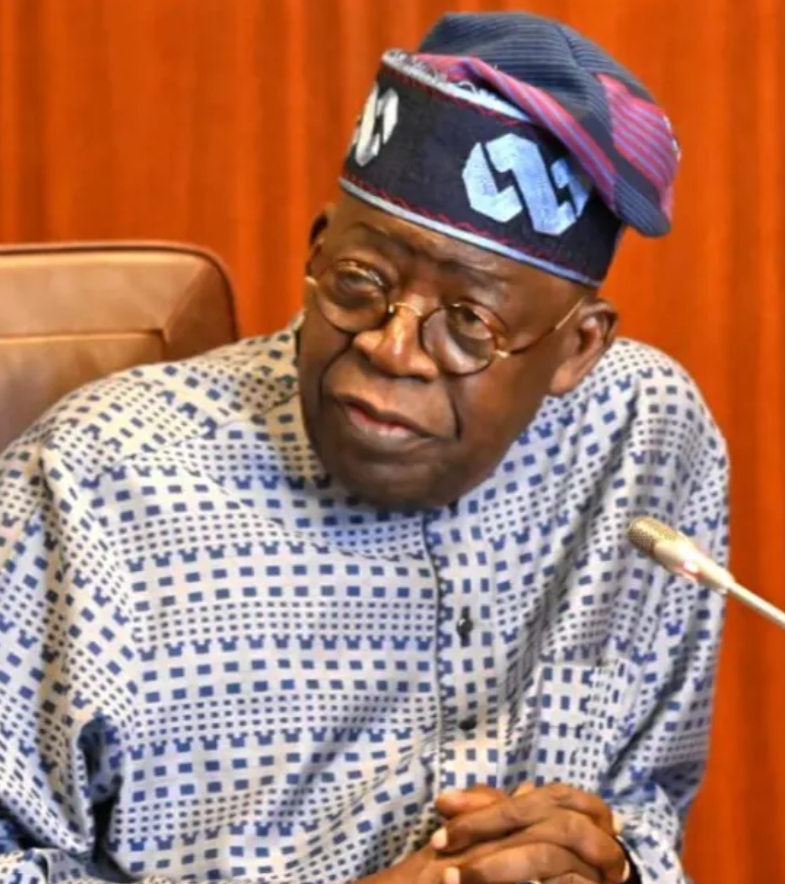
By Abubakar Gaya
When my family travelled along the Abuja–Kaduna–Zaria–Kano road last week, it was our little daughter who exclaimed ‘this road is different now.’ Our six-year-old daughter, Hadassah, is chatty. Always running commentaries on things around her. I was not surprised at her observation. It is a road we have travelled regularly from when she was a baby. When I prodded her to say the ‘difference’ she observed, she wittily said, ‘can’t you see you’re driving better and faster’. And we got the message. The ‘better’ means that I was not slowing down to dodge potholes and craters that used to define this critical road.
It was at that moment that it dawned on me that even if, as adults, we chose to see only the bad aspect of the Bola Ahmed Tinubu government, our children, including infants and kids, are observing the transformation being wrought in their environment. There is a common saying in Hausa: if you want to know the details of what happened at an event, ask a child who was at that event; not the adults. The adults would naturally want to sound politically and socially correct, but not the child. The child will in typical child-like innocence, point at the major actors at the event, who said what, how it was said, and every other detail that an adult will not disclose for whatever reason.
This is the case of policy and leadership analysis in Nigeria. It is worrisome how some northerners are painting an anti-north image of President Bola Tinubu. Each time I hear such narrative, I wonder if there are things I know that these critics do not know. But I also remember that in Nigeria, politics is an extremely prejudiced game, so partisan that even the apolitical may be swayed into aligning with a political philosophy because it comes with the loudest noise. As someone who has lived in Kano and Abuja and is familiar with the northern states through visits and temporary residency, I can with certainty say that I know the north and its people. The north is usually and historically united. Knitted by religion, food, culture, language (even with diverse ethnic groups) and all the values we hold dear. This has been the nature of the north hence the expression ‘northern hegemony.’ However, in recent decades, that hegemony has been split asunder by politics with all its bitterness and divisive tendencies.
This is the only explanation to justify the narrative that Tinubu is anti-north. Those who promote such tale are driven by the deluding influence of partisan politics. For, this is indeed a delusion, an illusionary spin to blight Tinubu just to spite his government. As a northerner who has seen democratic governments evolve in the 4th Republic since 1999, I can say with my chest out that Tinubu has out-performed expectations in the north. He has not only been pro-north in resource-sharing and political appointments, he has also been overtly gracious to the north in the distribution and execution of critical infrastructure.
The list is long of projects sited in the north or connecting the north to other parts of the country and even outside the country. An abridged checklist: Rehabilitation and expansion of the Abuja–Kaduna–Kano expressway; construction and upgrading of the Kano–Kongolam Road, including the Kano-Hadejia section of that all-important axis; the Sokoto–Badagry Superhighway, a 1,068-km, six-lane highway featuring an integrated rail line stretching across northern states from northwestern Nigeria and linking the region through south west states to coastal Lagos. For details, this project connects Illela in Sokoto State (at the Nigeria-Niger Republic border) to Badagry in Lagos State, coursing across Kebbi, Niger, Kwara, Oyo, Ogun, and Ondo states.
The Kaduna-Kano-Katsina-Maradi Railway is yet another ambitious trans-Sahara rail corridor connecting several northern states to Niger Republic, a revolutionary project that would give a booster shot to trade in the north.
The north is Nigeria’s undisputed food basket and agro-economy hub. From agrarian to pastoral agriculture, these roads and many more not listed, especially shorter connecting roads linking state-to-state and city-to-city are planned to serve as conveyor belts for the movement of goods, personnel and farm produce from the innermost markets and farmlands to city centres and markets. This is a carefully scripted marshal plan that grossly favours the north. The Federal Government data states that 48 of the 260 Special Intervention Projects nationwide are located in the North-West (Kaduna, Kano, Katsina, Jigawa, Kebbi, Sokoto and Zamfara), the highest for any geopolitical zone.
President Tinubu deserves credit for leaving agriculture in the firm hands of the north where Senator Abubakar Kyari (Borno State) is the minister. And he did not just leave it at that, he added real value to the sector with financing, tractor procurement, strategic partnerships with relevant agencies including the African Development Bank (AFDB) for a $134 million initiative to empower farmers with irrigation and storage capabilities to enable year-round agricultural production across 500,000 hectares. Truly, there has been a vast improvement and increment in the agriculture value-chain with investments in fertiliser, higher grade crop yields, livestock farming modernisation among others. If you consider that the north, not the south, plays big in agriculture, you will appreciate how these initiatives have helped the north, economically and otherwise.
Beyond roads and physical infrastructure is the issue of human capital and the distribution of same. Under Tinubu, the north has suffered no neglect in appointments to leadership of federal agencies. Data from relevant federal government agencies show that the North-west holds the largest zonal share of federal leadership positions with 157 appointments (22.1 per cent); followed by the North-central with 139 positions (19.5 per cent), and the South-west with 132 (18.5 per cent). The North-east comes next with 105 positions (14.7 per cent), while the South-south and South-east have 91 (12.8 per cent) and 88 (12.4 per cent) respectively. This places the north’s total at 401 positions, representing 56.3 per cent , while the southern region holds 311 positions (43.7 per cent).
Data from the Federal Character Commission (FCC) also show that in the distribution of Permanent Secretaries, the chief drivers of the public sector, the North-central leads with 19.5 per cent, while the North-east, North-west, and South-south each account for 17.1 per cent. The South-east and South-west follow with 14.6 per cent apiece.
It is hard for me, in good conscience, to join the choir whose only song is ‘Tinubu is anti-north.’ There is sincerely no empirical data to justify this. Primitive, partisan politics is driving it. On the contrary, I believe, as we say in my Kano hood, that Tinubu is a northerner garbed in Yoruba attire.
· Gaya, a public policy analyst, writes from Kano


Comments (0)
No comments yet. Be the first to share your thoughts!