


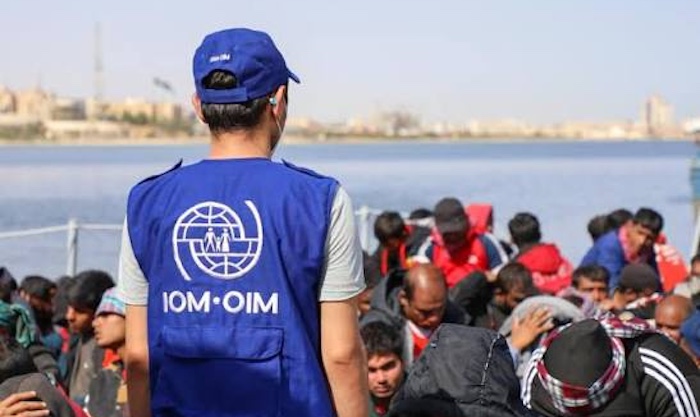
The International Organisation for Migration (IOM) has raised fresh concerns over the worsening humanitarian situation in Katsina State, revealing that more than 138,000 residents were displaced by armed attacks and climate-related disasters within a one-year period.
The organisation said the combined impact of banditry, kidnapping, floods and severe weather conditions forced thousands of families to abandon their homes between January 2025 and January 2026, further deepening the displacement crisis across the state.
IOM Chief of Mission in Nigeria, Sharon Dimanche, disclosed the figures on Friday during a media parley and press conference held at the organisation’s office in Katsina.
Presenting findings from the agency’s latest assessment, Dimanche said natural disasters accounted for the largest share of the displacement, with about 72,000 people uprooted by floods, heavy rainfall and destructive windstorms.
She added that another 60,000 residents were forced to flee their communities as a result of persistent armed banditry, kidnappings and insecurity across parts of the state.
The findings, according to the organisation, underscore the growing twin threats of insecurity and climate change confronting communities in Katsina.
Beyond the newly displaced population, the IOM revealed that Katsina currently hosts about 181,000 internally displaced persons (IDPs), placing the state among the worst-hit in Nigeria’s North-West region.
The report also identified 37,000 returnees, indicating that thousands of displaced residents have begun returning to their communities despite ongoing security concerns and economic hardship.
However, Dimanche cautioned that returning home does not automatically translate into recovery.
“The question is not simply: Have they returned? The real question is: Can they stay? Can they rebuild their lives? Can they feel safe again?” she asked.
According to her, many returnees face enormous challenges, including damaged homes, destroyed livelihoods and the continued threat of violence, making long-term reintegration uncertain.
She noted that while displacement figures across the North-West and North-Central regions declined by about five per cent between October 2025 and February 2026, the humanitarian situation remained fragile, particularly in states grappling with recurring attacks and environmental disasters.

The IOM chief stressed that Katsina and neighbouring Zamfara State remain critical examples of how insecurity and climate shocks continue to drive population movements across northern Nigeria.
She argued that stronger peacebuilding efforts and functional early-warning systems could significantly reduce the number of people forced to flee their homes.
According to Dimanche, most conflicts and security crises often show warning signs long before violence erupts, giving authorities and communities an opportunity to intervene before situations spiral out of control.
“When early warning works, the result may never make the news. A dispute is resolved. A farmer remains on his land. Children remain in school. A family does not have to flee,” she said.
She described such interventions as one of the most effective ways of preventing displacement, noting that keeping communities safe and stable is far more sustainable than responding after residents have already been uprooted.
Dimanche further disclosed that the IOM is implementing a Conflict Prevention, Crisis Response and Resilience (CPCRR) Programme in Katsina and Zamfara states with support from the European Union.
According to her, the initiative focuses on strengthening community resilience, promoting peacebuilding efforts and improving local early-warning mechanisms to help identify emerging threats before they escalate into violence.
She explained that the programme is designed to empower communities, traditional institutions and local stakeholders to resolve disputes peacefully, respond to risks promptly and reduce the factors that trigger displacement.
The latest figures highlight the scale of the challenges facing Katsina, where residents continue to battle a combination of armed violence, economic disruption and increasingly severe weather events.
For many affected families, the crisis extends beyond displacement itself, raising urgent questions about safety, recovery and the future of communities struggling to rebuild amid persistent uncertainty.

.jpg)
Comments (0)
No comments yet. Be the first to share your thoughts!