


By Taibat Ummi Yakubu
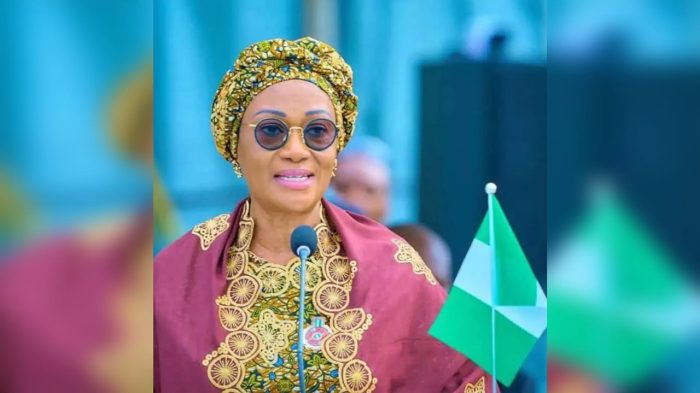
Thousands of Nigerian schoolgirls could benefit from renewed efforts to tackle period poverty and the financial difficulties that keep children out of classrooms, following the launch of a N2 billion education support programme by First Lady Oluremi Tinubu.
The intervention, which targets 100,000 pupils with financial assistance of N20,000 each, comes alongside plans to distribute two million packs of sanitary towels to girls in public basic education schools across the country.
The initiative was unveiled in Abuja on Monday as Nigeria marked the 2026 International Day of the Girl Child, with government officials and education stakeholders drawing attention to the connection between poverty, menstrual health, school attendance and the risk of early marriage.
For girls from struggling households, the cost of basic school supplies and menstrual hygiene products can become a serious obstacle to regular attendance. The new intervention seeks to ease some of those pressures while providing learning materials, including school bags, shoes, exercise books, mathematical sets and writing materials.
Tinubu said girls, especially those in rural communities, should not have their education interrupted because their families cannot afford sanitary products. She called for a society in which every girl could learn, develop her abilities and contribute to national progress.
The programme extends an earlier initiative launched through the First Lady’s Renewed Hope Initiative in October 2025. That intervention provided a one-year supply of disposable sanitary pads to 370,000 schoolgirls in rural communities.

The Federal Government is now seeking to move beyond periodic donations by incorporating menstrual hygiene support into its basic education funding arrangements. Education Minister Tunji Alausa said the Universal Basic Education Commission (UBEC) would make annual budgetary provisions for sanitary towels, while the World Bank-supported Adolescent Girls Initiative for Learning and Empowerment project would continue its support for the duration of the programme.
According to Alausa, the government’s earlier target of reaching 370,000 adolescent girls had been achieved, and the latest distribution would extend assistance to more pupils.
UBEC Executive Secretary Aisha Garba said relatively simple interventions could make a significant difference to a girl’s educational prospects. She described the predicament of a rural schoolgirl who dreams of becoming a doctor, lawyer, engineer or teacher but struggles to attend classes because her family cannot afford menstrual products.
Garba also disclosed that UBEC had built more than 4,000 classrooms in less than three years, supplied learning materials to over three million pupils and helped bring more than 700,000 out-of-school children back into education.
The Chairman of the UBEC Governing Board, Tanko Al-Makura, linked the campaign to efforts to prevent early marriage, arguing that girls often disengage from school gradually before marriage formally ends their education. He said financial hardship could leave girls particularly vulnerable to dropping out.
Meanwhile, Minister of State for Education Suwaiba Sa’id Ahmad urged girls not to allow economic difficulties to extinguish their ambitions, while the Sultan of Sokoto, Muhammad Sa’ad Abubakar III, represented by the Emir of Argungu, called on community and religious leaders to confront harmful practices and misconceptions that restrict children’s access to education.
The British High Commission’s Education Lead, Ian Attfield, also stressed the long-term value of educating girls. He cited estimates that each additional year of schooling raises women’s earnings by an average of 12 per cent and said UK-supported programmes had helped more than 1.5 million additional girls access education in northern Nigeria since 2012.
Beyond the distribution of money and supplies, the initiative places renewed emphasis on the responsibility of families, schools, governments and community leaders to ensure that girls can continue learning without being held back by poverty, menstrual stigma or harmful social practices.

.jpg)

Comments (0)
No comments yet. Be the first to share your thoughts!