


By Taibat Ummi Yakubu
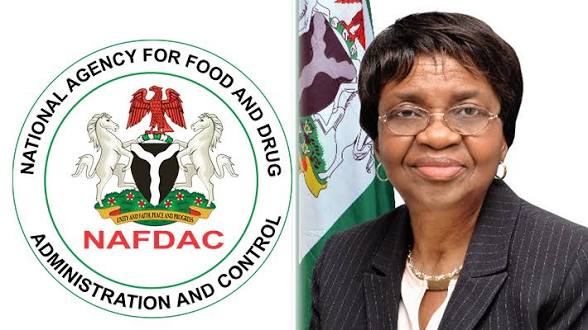
The Director-General of the National Agency for Food and Drug Administration and Control (NAFDAC), Prof. Mojisola Adeyeye, has ignited fresh debate over the fight against counterfeit products in Nigeria, calling for life imprisonment or even the death penalty for individuals involved in the production and distribution of fake medicines, foods, beverages and other regulated products.
Describing counterfeiters as “merchants of death,” Adeyeye argued that existing punishments are no longer sufficient to deter criminals whose activities continue to endanger millions of lives and undermine public confidence in the nation’s healthcare and consumer protection systems.
Her remarks come amid growing concerns over the circulation of fake and substandard products across the country, a challenge NAFDAC says has evolved into a highly organised and lucrative criminal enterprise.
Speaking on the agency’s recent enforcement efforts, Adeyeye disclosed that NAFDAC removed 7,210 brands of non-compliant products from circulation between May and July 2026 during nationwide surveillance operations conducted across the 36 states and the Federal Capital Territory.
According to her, enforcement teams visited 5,738 facilities within the three-month period, targeting products ranging from food and bottled water to pharmaceuticals, herbal products, cosmetics, medical devices, vaccines and industrial chemicals.
Food and water products accounted for the largest share of seized items, with 3,633 products withdrawn from the market, while drugs and herbal products followed closely with 2,459 products.
The NAFDAC chief revealed that the agency had dismantled several counterfeiting operations, including the production of fake Colgate and Oral-B toothpastes as well as the illegal refilling and distribution of CWay dispenser water bottles.
She said investigations into counterfeit toothpaste complaints led to the arrest of suspects allegedly behind the operation, adding that even the manufacturers of the affected brands had expressed satisfaction with NAFDAC’s intervention.
In one of the most alarming discoveries, the agency uncovered three companies allegedly involved in refilling empty CWay-branded 19-litre water bottles with water sourced from unapproved facilities before redistributing them to hotels, supermarkets and unsuspecting consumers.
According to Adeyeye, the practice poses serious public health risks because consumers have no way of knowing the origin, safety or quality of the water inside the containers.
The revelations form part of a broader crackdown that has seen NAFDAC intensify enforcement activities nationwide.
The agency recalled its large-scale operations carried out between February and March 2025 in major commercial hubs such as Idumota in Lagos, Onitsha Bridgehead Market in Anambra State and Aba in Abia State.
Those operations resulted in the seizure and destruction of more than 137 truckloads of counterfeit and substandard products valued at over N1.5 trillion, one of the largest anti-counterfeiting exercises in the agency’s history.
The campaign has continued throughout 2026.
In February, NAFDAC destroyed fake, expired and banned medicines worth more than N15 billion in Ibadan, including Analgin, codeine-based syrups, tramadol, oxytocin and expired vaccines.
A month later, another destruction exercise in Abuja saw counterfeit medicines and regulated products valued at N1.8 billion eliminated.
The confiscated items included narcotics, antibiotics, antimalarial drugs, counterfeit milk products, skin-lightening creams, fake insecticides and medical devices.
At the Lagos Trade Fair Market, enforcement officers seized more than 10 million doses of counterfeit anti-malaria medicines and fake cosmetics worth approximately N3 billion. Four suspects were arrested after the products were discovered inside a three-storey building allegedly being used as a warehouse.
In Nasarawa State, the agency also uncovered a counterfeit rice packaging operation, confiscating more than 1,600 bags of fake rice valued at about N5 million.
Beyond seizures and product destruction, Adeyeye said NAFDAC has shifted its focus toward ensuring that offenders face criminal prosecution.
According to her, the agency has secured 64 convictions across the country, with courts handing down prison sentences ranging from one to seven years without the option of a fine.
She cited cases involving fake drugs, counterfeit antibiotics, falsified ointments and counterfeit condoms, noting that one woman convicted of pharmaceutical counterfeiting received a seven-year prison term.
Despite these convictions, the NAFDAC boss insisted that the current legal framework does not adequately reflect the gravity of the offence.
She disclosed that both the NAFDAC Act and the Counterfeit and Fake Drugs Act are currently under review and argued that the revised legislation should impose far harsher penalties.
For Adeyeye, the issue goes beyond economic sabotage. She believes counterfeit products can directly lead to illness, treatment failure and death, making those responsible as dangerous as violent criminals.
That conviction explains her controversial call for the harshest sanctions available under the law, including life imprisonment or capital punishment for offenders found guilty of manufacturing and distributing fake regulated products.
While defending the agency’s aggressive enforcement strategy, Adeyeye urged Nigerians to play a more active role in exposing counterfeiters, insisting that those involved are often ordinary people hiding in plain sight.
According to her, counterfeiters are not mysterious figures operating from distant locations but individuals embedded within communities, neighbourhoods and business circles.
She encouraged citizens to report suspicious products directly to NAFDAC through the agency’s complaint channels, including a dedicated call centre established about eight months ago.
At the same time, she cautioned Nigerians against relying solely on social media allegations, stressing that online claims must be scientifically verified before products can be declared fake, adulterated or unsafe.
Adeyeye also used the occasion to respond to critics who have questioned her leadership of the agency.
Reflecting on her tenure since taking office in 2017, she said she inherited a regulator weighed down by debt, obsolete equipment and weak institutional capacity.
According to her, NAFDAC owed about $3.2 million in liabilities when she assumed office, while a significant percentage of its laboratory equipment was non-functional.
She said the agency subsequently cleared most of the debt, modernised its operations and achieved major international milestones, including attaining Maturity Level Three status in 2022—making it the first regulatory agency in Africa to reach that level.
NAFDAC later joined the International Medical Device Regulators Forum and the International Council for Harmonisation, developments Adeyeye described as evidence of growing international confidence in Nigeria’s regulatory system.
Having spent nearly four decades in the United States and built a successful academic career before returning home, Adeyeye said her decision to serve in government was driven by a desire to improve Nigeria’s global image and strengthen public institutions.
As counterfeiters continue to evolve their methods and infiltrate markets across the country, she maintained that the battle against fake products cannot be left to regulators alone.
For NAFDAC, the war against counterfeit goods is no longer simply a regulatory challenge—it is a public health emergency, one that Adeyeye believes demands the toughest possible response from both the law and society.

.jpg)
Comments (0)
No comments yet. Be the first to share your thoughts!