


BY TAIBAT UMMI YAKUBU
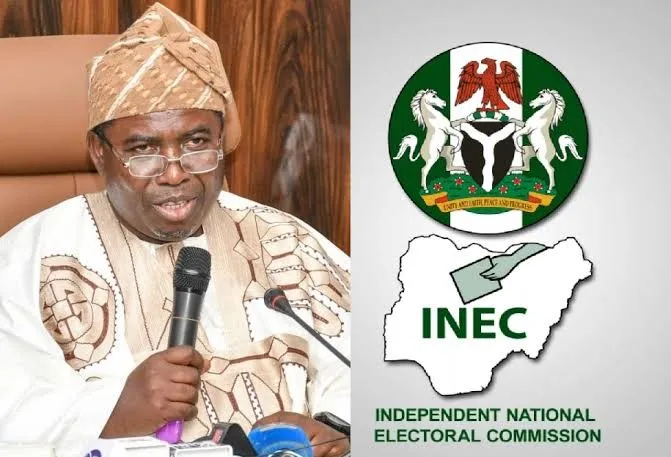
The Independent National Electoral Commission (INEC) has warned political parties that candidates whose names were not included in the membership registers submitted to the commission within the stipulated period risk being barred from contesting the 2027 general elections.
The commission also indicated that affected parties might not be allowed to replace such candidates, stressing that political parties should not be permitted to benefit from violations of electoral laws.
INEC National Commissioner for Information and Voter Education, Mohammed Haruna, disclosed this while speaking on Trust TV’s Daily Politics programme, explaining the possible implications of a Supreme Court judgment delivered on September 24, 2026.
The judgment affirmed the constitutionality of Sections 77(5), 77(6) and 77(7) of the Electoral Act 2026 and upheld INEC’s revised timetable for the 2027 general elections.
Haruna said the commission was reviewing the judgment and obtaining legal advice before announcing its final position, which he indicated would be made public by the following Tuesday.
He argued that allowing political parties to substitute candidates who failed to meet the membership registration requirements could effectively reward their failure to comply with the law.
“It’s like you committed an offence. And then, you come and benefit from it,” Haruna said, referring to previous electoral disputes involving Zamfara and Plateau states.
According to him, the commission examined candidates seeking various elective offices, including those contesting for seats in state Houses of Assembly, and would scrutinise whether their names appeared on the membership registers submitted by their parties.
He warned that the consequences could extend beyond governorship and senatorial contests, potentially affecting candidates seeking other elective positions.
Among the politicians whose nominations could attract attention under the membership registration rules are Rivers State governorship candidate of the All Progressives Congress (APC), Kingsley Chinda; former Deputy Senate President Ovie Omo-Agege, who is linked to the Nigeria Democratic Congress (NDC) senatorial contest in Delta Central; former Cross River State Governor Donald Duke, presidential candidate of the Peoples Redemption Party (PRP); and former Delta State House of Assembly Speaker Victor Ochei.
Haruna explained that INEC was taking extra precautions because of previous instances in which forged court documents were presented to the commission. He said the receipt of a purported certified true copy of a judgment was not enough without proper verification.
The commission's eventual interpretation of the ruling is expected to provide greater clarity on the eligibility of affected candidates and the extent to which political parties can make changes to their nominations ahead of the 2027 polls.
INEC Chairman Warns Media Against Unverified Election Fraud Claims
Meanwhile, INEC Chairman, Professor Joash Amupitan, has cautioned online publishers against spreading unverified allegations of electoral fraud, warning that such reports could undermine public confidence in elections even if they are later withdrawn or corrected.
Amupitan delivered the warning at the 10th Annual Conference of the Guild of Corporate Online Publishers (GOCOP) in Lagos, where he was represented by the Lagos State Resident Electoral Commissioner, Professor Ayobami Salami.
The conference, themed “2027 Elections: Trust, Transparency and Shared Responsibilities,” focused on the roles of electoral institutions, the media and other stakeholders in ensuring credible elections.
In a statement issued by his Chief Press Secretary, Adedayo Oketola, the INEC chairman urged media organisations to prioritise accuracy and verification over the pressure to publish breaking news ahead of competitors.
He warned that sensational headlines, fabricated reports, manipulated content and artificial intelligence-generated deepfakes could inflame tensions, deepen divisions and weaken trust in democratic institutions.
According to Amupitan, election periods have increasingly become targets for coordinated disinformation campaigns designed to spread misleading narratives about electoral processes and provoke public unrest.
He maintained that false claims about electoral manipulation could discourage voter participation and damage the credibility of institutions responsible for conducting elections.

The chairman therefore urged journalists and online publishers to verify allegations with INEC and other credible sources, particularly when reporting polling-unit results, suspected irregularities and claims of electoral interference.
He also advised media organisations to provide adequate context when reporting operational challenges during elections rather than portraying isolated incidents as proof of widespread failure.
Speaking on the authority to announce election results, Salami clarified that the 1999 Constitution vests the power to declare or return election results in the designated Returning Officers.
He explained that holding a position within INEC does not automatically confer that constitutional responsibility, noting that even a Resident Electoral Commissioner does not independently possess the authority to return every election result.
Salami said Returning Officers are appointed by the commission and are constitutionally empowered to perform the responsibility for the elections assigned to them.
In his opening remarks, Conference Chairman, Dr Olisa Agbakoba, SAN, urged INEC to ensure that the 2027 general elections are free, fair and credible, emphasising the constitutional right of Nigerians to vote.
He also challenged presidential candidates to clearly explain their positions on fuel subsidy and outline what they would do differently if elected, identifying the future of the subsidy regime as one of the issues likely to shape political debate ahead of the elections.
Sokoto INEC Begins Voter Register Display, PVC Distribution
In a separate development, INEC in Sokoto State has commenced arrangements for the display of the Preliminary Register of Voters for claims and objections, alongside the distribution of Permanent Voter Cards (PVCs), from October 9 to 15.
The state Resident Electoral Commissioner, Umar Garba, announced the exercise during a press briefing at the commission’s headquarters in Sokoto.
He said the seven-day exercise would take place at Registration Area centres across the state, particularly in locations without security concerns, to enable registered voters to check their details and request corrections where necessary.
Garba disclosed that newly produced PVCs had arrived and that the commission had put logistics in place for the exercise.
However, he clarified that the cards currently available for collection were exclusively for newly registered voters captured during the first phase of the most recent Continuous Voter Registration exercise.
PVCs relating to lost or damaged cards, transfers, updates and registrations completed during the second and third phases were not yet available, he said, assuring affected voters that further announcements would be made once the cards arrived.
The REC added that after the Registration Area-level exercise ends on October 15, PVC distribution would continue at INEC offices across Sokoto State’s 23 local government areas for voters unable to collect their cards at the designated centres.
He urged registered voters to visit their assigned locations within the stipulated period to verify their names, photographs and other personal details, and report errors or omissions through the appropriate channels.
The exercise is part of preparations for the 2027 general elections, with INEC encouraging eligible voters to ensure that their records are accurate and that they collect their PVCs when available.
As political parties prepare for the elections, the commission’s warning over candidate eligibility, its appeal for responsible election reporting and its voter registration activities highlight three critical issues ahead of 2027: compliance with electoral laws, public trust in election information and the readiness of voters to participate in the democratic process.

Comments (0)
No comments yet. Be the first to share your thoughts!