


For years, they have thrived in the shadows moving money across borders, recruiting through digital platforms, trafficking drugs and people, and exploiting gaps between agencies. Their operations have become so sophisticated that security experts now warn that organised crime is no longer a collection of isolated offences but a vast underground enterprise threatening national stability.
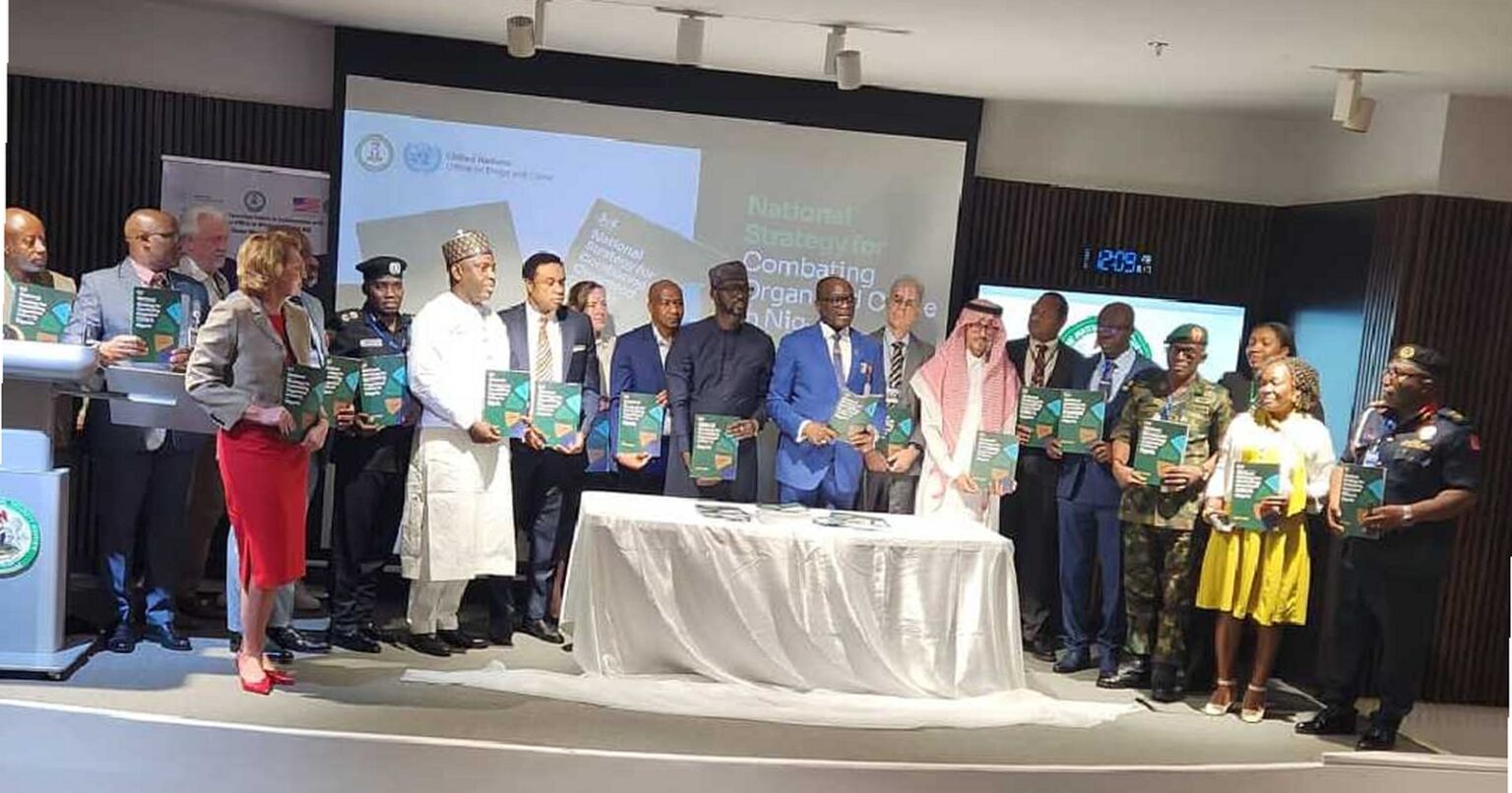
In a move aimed at confronting this growing menace, the Federal Government has unveiled a comprehensive five-year National Strategy for Combating Organised Crime, a blueprint designed to dismantle criminal networks, choke illicit financial flows and strengthen coordination among security institutions.
The strategy, which will run from 2027 to 2031, was launched on Monday in Abuja by the National Security Adviser (NSA), Malam Nuhu Ribadu, represented by the National Coordinator of the National Counter-Terrorism Centre (NCTC), Maj.-Gen. Adamu Laka.
Officials say the plan represents one of Nigeria's most coordinated attempts yet to tackle the web of crimes that fuel insecurity and economic losses across the country.
Rather than focusing on a single threat, the framework targets a broad spectrum of criminal activities, including terrorism, drug trafficking, human trafficking, cybercrime, maritime offences, corruption and illicit financial transactions.
Speaking at the unveiling, Ribadu warned that criminal organisations have evolved beyond traditional structures and now operate through interconnected networks capable of undermining governance, public safety and economic development.
According to him, defeating such groups will require more than the efforts of individual institutions.
"The challenges we face today demand coordination, intelligence-sharing and collective action across all sectors," he said.
He explained that the strategy embraces a whole-of-government and whole-of-society approach, bringing together security agencies, government institutions, civil society organisations and international partners under a unified framework.
Ribadu urged all ministries, departments and agencies assigned responsibilities under the strategy to sustain the cooperation that made its development possible.
He said the new framework would help authorities anticipate emerging threats, disrupt criminal operations and ensure that those profiting from organised crime face justice.
The NSA further assured stakeholders that his office would provide the necessary leadership through intelligence coordination, operational support and strengthened inter-agency collaboration.
While government officials expressed optimism about the initiative, international partners cautioned that implementation would determine whether the strategy succeeds or joins a long list of ambitious plans that failed to achieve their objectives.
The Country Representative of the United Nations Office on Drugs and Crime (UNODC), Mr Cheikh Touré, described organised crime as a highly adaptive ecosystem capable of exploiting institutional weaknesses and operating across national borders.

He noted that many national strategies collapse not because they are poorly designed, but because they suffer from weak coordination, inadequate resources and inconsistent execution.
Touré urged Nigeria to invest more heavily in law enforcement and justice institutions, stressing that international support should complement—not replace—domestic commitment.
He described organised crime as a major obstacle to development and investment, warning that its impact extends far beyond security concerns.
"The real measure of success will be seen in communities across Nigeria by 2031," he said.
Also speaking, the Director of the U.S. Bureau of International Narcotics and Law Enforcement Affairs, Mr Tolliver Derrick, described the strategy as a significant milestone in the growing security partnership between Nigeria and the United States.
According to him, organised crime, terrorist financing and cyber-enabled financial crimes have become increasingly intertwined, making international cooperation more important than ever.
Derrick pledged continued American support in helping Nigeria build capacity to disrupt criminal syndicates, trace illicit financial flows and strengthen cooperation with global law enforcement bodies.
He noted that every criminal network dismantled contributes to greater security not only in Nigeria but also in countries affected by transnational crime.
For his part, the National Coordinator of the National Cybersecurity Coordination Centre (NCCC-ONSA), Mr Sa'ad Abubakar, said effective implementation and information sharing would be crucial to achieving the strategy's objectives.
He commended the document for clearly assigning responsibilities to specific agencies, describing it as a departure from previous frameworks that often lacked accountability mechanisms.
Abubakar reaffirmed the centre's commitment to strengthening Nigeria's response to cybercrime and supporting efforts to protect citizens from increasingly sophisticated digital threats.
As Nigeria prepares to begin implementing the ambitious framework, one question remains: can the country finally outpace the criminal networks that have quietly expanded their reach across borders, cyberspace and communities, or will the battle against organised crime prove more complex than anticipated?



Comments (0)
No comments yet. Be the first to share your thoughts!