


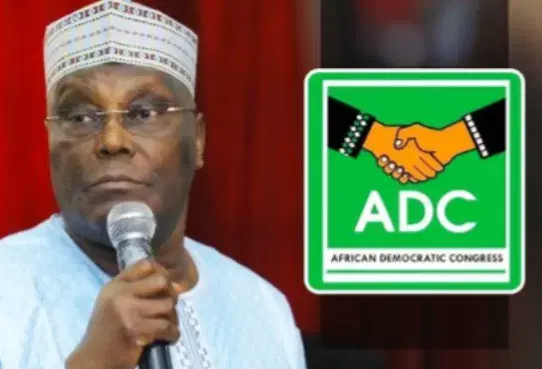
The 2027 presidential campaign has opened another front over the rising cost of education, with African Democratic Congress (ADC) presidential candidate, Atiku Abubakar, promising to overhaul Nigeria’s student loan system and consider debt forgiveness for qualified beneficiaries if he wins the presidency.
Atiku’s position came in response to a recent exchange with President Bola Tinubu over the state of the Nigerian economy, particularly the cost of energy and the impact of government policies on ordinary citizens.
The former vice president’s Senior Special Assistant on Public Communication, Phrank Shaibu, made the position known in a statement on Tuesday evening.
The statement followed Tinubu’s reference to the Nigerian Education Loan Fund (NELFUND) in a post on X, where the president was responding to Atiku’s economic proposals, including his call for measures to bring down energy costs.
But for Atiku’s camp, the existence of NELFUND should not be presented as proof that education has become cheaper or more accessible.
Shaibu argued that the government cannot increase the financial pressure on students through rising education costs and then point to borrowing facilities as evidence that it has solved the problem.
He questioned why students should have to take loans simply to cope with expenses that, in his view, should be addressed through policies aimed at making education more affordable in the first place.
“Celebrating NELFUND as proof that education has become affordable under your government is like setting school fees on fire and then boasting that you lent students a bucket of water,” he said.
The ADC campaign maintained that the bigger issue is not merely whether students can obtain loans, but whether Nigerian families can afford to educate their children without taking on additional financial obligations.
Shaibu said an Atiku administration would therefore examine the current student-loan arrangement and introduce measures that could relieve eligible graduates of their outstanding education debts.
He said the proposed approach would combine efforts to reduce the cost of education with a review of existing student debts, including forgiveness for beneficiaries who meet the required conditions.
The objective, he said, would be to ensure that young Nigerians do not leave school already burdened by repayments before they have had the opportunity to establish themselves economically.
“Education should open doors, not mortgage the future,” Shaibu said.

He further argued that there was an important difference between providing financial assistance through loans and making education genuinely affordable.
According to him, a student loan may provide temporary relief, but it still leaves the beneficiary with an obligation to repay the money.
Shaibu also took aim at the Federal Government’s argument that Atiku’s proposal for reducing energy costs could have consequences for NELFUND, workers’ wages and the minimum wage.
He challenged the presidency to explain, with figures, how the former vice president’s proposal—particularly the plan involving Nigerian crude supplied for domestic refining—would result in reduced funding for student loans or workers.
“If your government has the arithmetic, Bola, publish it,” he said, demanding that the administration show Nigerians how the proposal would affect government finances.
Rather than viewing cheaper energy as a threat to social programmes, Shaibu argued that reducing the cost of fuel, electricity and transportation could ease the broader economic pressure on Nigerian households.
He said lower transport costs would leave workers with more of their income after commuting, while cheaper energy would improve the purchasing power of salaries.
For students and their families, he argued, the benefit would also be felt through reduced household expenses.
The latest exchange adds education and student debt to the growing policy debate between Atiku and the Tinubu administration ahead of the 2027 presidential election.
At the heart of the disagreement is a broader question: should government help Nigerians cope with rising costs by providing access to loans, or should its policies focus first on bringing down the costs that force citizens to borrow?
Atiku’s camp says its priority would be the latter, coupled with a review of existing student debts and forgiveness for Nigerians who qualify under the proposed framework.

.jpg)
Comments (0)
No comments yet. Be the first to share your thoughts!