



By Taibat Ummi Yakubu
Katsina State Governor, Malam Dikko Umaru Radda, has announced a series of measures to improve judicial welfare, modernise court operations and strengthen the administration of justice as the Katsina State High Court of Justice formally opened its 2026/2027 Legal Year.
The measures include the provision of new official vehicles, plots of land and additional allowances for judicial officers, the introduction of computerised court processes and virtual proceedings, and the installation of solar power at the High Court headquarters.
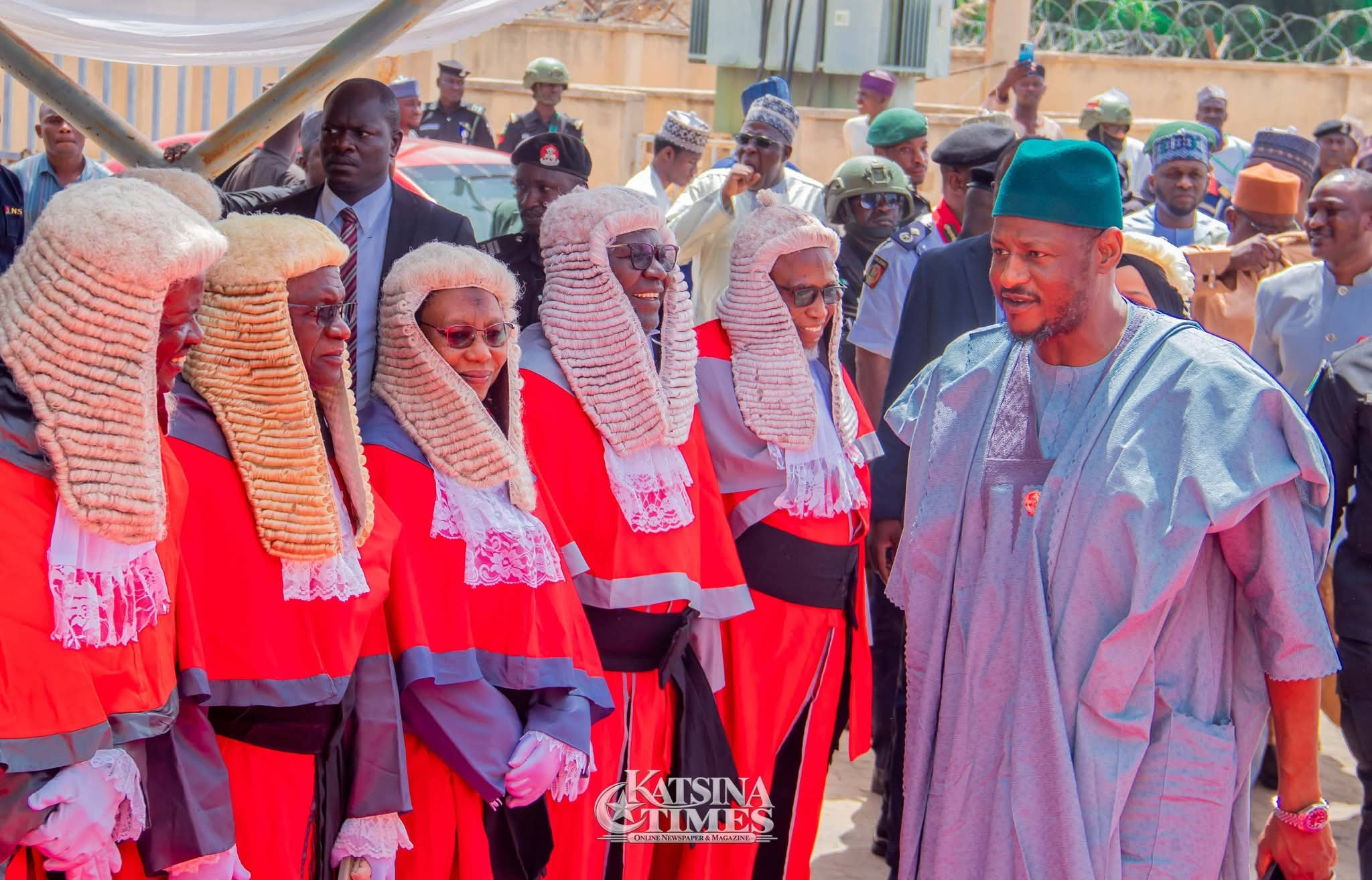
Radda announced the initiatives during the legal year ceremony hosted by the Chief Judge of Katsina State, Hon. Justice Musa Danladi Abubakar. The event brought together senior judicial officers, government officials, security chiefs, legal practitioners, religious leaders and other stakeholders in the administration of justice.
Among the dignitaries in attendance was the governor, whose participation underscored his administration's stated commitment to judicial independence, the rule of law and improved access to justice.
Under the proposed welfare package, the state government plans to provide brand-new official vehicles, choice plots of land and special housing and domestic allowances for High Court judges, Grand Kadis of the Sharia courts, magistrates and state counsel.
The measures are intended to ease the financial pressures facing judicial officers and legal personnel amid prevailing economic challenges. The initiative also highlights the importance of improving working conditions for those responsible for interpreting the law, resolving disputes and upholding justice.
Beyond welfare, the government is moving to modernise the state's judicial system through the computerisation and digitalisation of court processes. According to the information provided, approval has been granted for the introduction of digital judicial services, including virtual court proceedings, beginning with the High Court headquarters and its divisions.
If fully implemented, the reforms could reduce some of the administrative delays associated with conventional court procedures, improve the management of case records and make court services more accessible. Virtual proceedings could also offer additional flexibility in cases where physical attendance presents logistical difficulties, subject to applicable legal and procedural requirements.
The government is also planning to equip the High Court headquarters with a sustainable solar power system to minimise interruptions caused by unreliable electricity supply. The proposed intervention is expected to support court operations, protect essential equipment and help proceedings continue more consistently.
On legal reforms, the administration is reviewing and updating existing state laws to reflect contemporary social and economic realities. Amendments to the Penal Code are also underway, with the stated aim of introducing tougher penalties for cybercrime, kidnapping, abduction and the activities of informants.

These proposed amendments form part of the government's broader efforts to strengthen the legal framework for addressing criminal activities and emerging security challenges. Their final impact will depend on the provisions adopted through the appropriate legislative process and their subsequent implementation.
In another development, the state has established a dedicated Forestry Court to handle prosecutions involving illegal encroachment on forest reserves. The specialised court is intended to strengthen enforcement against unlawful occupation of protected areas and support the protection of forest resources.
The government's support for the legal profession also featured in the announcements, with the completion and handover of a new bar centre to the Nigerian Bar Association (NBA) branch in Katsina. The facility is expected to provide members of the Bar with a dedicated space for professional engagement and activities.
Throughout the ceremony, judicial independence and the efficient administration of justice remained central themes. Radda reiterated his administration's commitment to respecting the judiciary's constitutional responsibilities, stressing that executive authority would not be used to interfere with judicial duties.
He also urged judges to remain diligent and impartial in the discharge of their responsibilities, while prioritising the speedy determination of cases and reducing the backlog of pending matters.
The emphasis on efficiency comes amid continuing public expectations for a justice system that resolves disputes promptly, protects the rights of citizens and ensures that legal processes are not unnecessarily prolonged.
The ceremony attracted representatives of major security and law-enforcement agencies, including the Nigeria Police Force, Nigeria Immigration Service, Economic and Financial Crimes Commission (EFCC), Federal Road Safety Corps (FRSC) and Nigeria Customs Service. Judges, the Attorney-General and Commissioner for Justice, members of the NBA, including practitioners from its Funtua zone, religious leaders and other senior officials were also among the participants.
Their presence reflected the broad institutional interest in the administration of justice and the relationship between the courts, law-enforcement bodies, government institutions and the legal profession.
As the 2026/2027 Legal Year begins, the announced initiatives place judicial welfare, technological modernisation, infrastructure and legal reform at the centre of the state's judicial agenda.
However, the effectiveness of the measures will ultimately be assessed by their implementation and their impact on court efficiency, access to justice, the timely resolution of cases and public confidence in the legal system.


Comments (0)
No comments yet. Be the first to share your thoughts!