


.jpg)
The Federal Government has sounded a fresh warning over the growing security threats along Africa’s border regions, revealing that many of the continent’s frontiers are increasingly being exploited by terrorists, arms traffickers, smugglers and other transnational criminal networks.
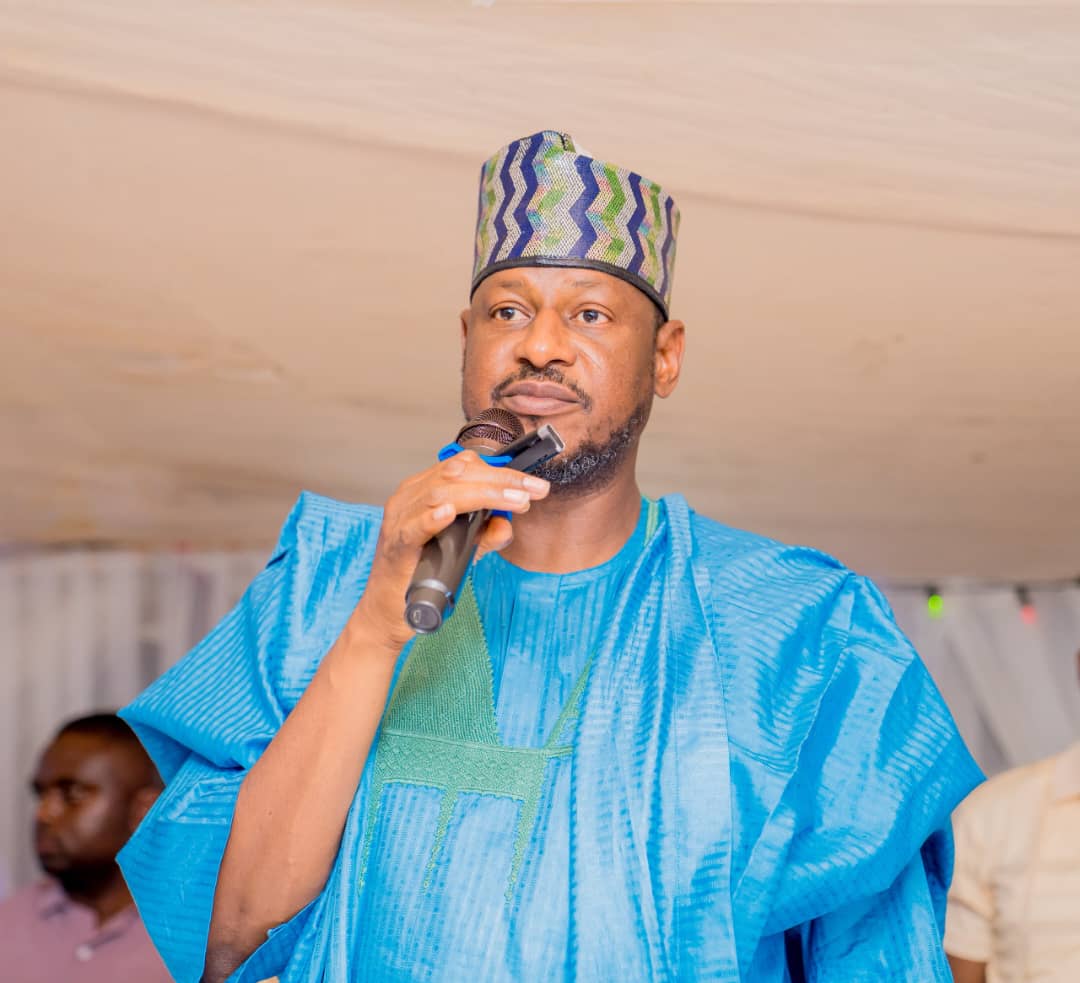
The alarm was raised by the Director-General of the National Boundary Commission (NBC), Surveyor Adamu A. Adaji, who cautioned that traditional approaches to border security are no longer sufficient to tackle the rapidly evolving threats confronting African nations.
Speaking at the 2026 International Conference of the African Borderlands Research Network (ABORNE) in Lagos, Adaji said Africa's borderlands have transformed into critical security flashpoints where criminal activities, migration pressures, economic interests and regional integration agendas increasingly intersect.
According to him, governments must move beyond relying solely on military deployments, checkpoints and physical infrastructure if they hope to effectively address modern border challenges.
He argued that the nature of contemporary threats demands smarter, research-driven and collaborative approaches capable of balancing security concerns with legitimate trade and human mobility.
“Borders today are not just lines separating nations; they are strategic spaces where issues of security, trade, migration, citizenship, identity, environmental management and regional cooperation converge,” he said.
Adaji noted that terrorism, banditry, arms trafficking, smuggling, irregular migration and maritime crimes continue to expose weaknesses in border governance systems across several African countries, including Nigeria.
He warned that criminal groups are increasingly exploiting porous frontiers and governance gaps to move weapons, fighters, contraband goods and illicit funds across national boundaries.
“The challenge before us is no longer simply how to secure borders, but how to govern them in ways that balance sovereignty with cooperation, security with mobility and national interests with regional aspirations,” he stated.
The NBC boss stressed that effective border management requires policies built on credible research, accurate data and evidence-based decision-making rather than reactive security responses alone.
His remarks formed a central part of discussions at a high-level plenary session titled “Frontiers: Border Demarcation, Maritime Governance and Cross-Border Cooperation in a Changing Security Landscape.”
The roundtable brought together security experts, academics, policymakers and senior officials to examine the growing relationship between border governance and regional security.

Among the participants was the Force Commander of the Multinational Maritime Task Force in the Gulf of Guinea, Commodore M. S. Shettima, alongside top officials of the National Boundary Commission.
According to a statement issued by NBC Head of Press and Public Relations, Chinwe Udouwem, delegates at the conference identified terrorism, banditry, arms trafficking, smuggling, irregular migration and maritime insecurity as some of the most pressing threats requiring urgent and coordinated regional action.
The discussions also focused on boundary demarcation, maritime governance and mechanisms for strengthening cross-border cooperation among African states.
Adaji emphasized that security agencies alone cannot solve the complex challenges facing border communities, calling for stronger partnerships involving governments, researchers, development organisations and local populations.
He argued that border communities, often the first victims of insecurity and criminal activities, must be integrated into policy formulation and security strategies if sustainable solutions are to be achieved.
His position reflects a growing consensus among security experts that lasting stability in Africa’s border regions will depend not only on enforcement measures but also on development, inclusion and community engagement.
The five-day ABORNE conference, which runs from August 24 to 28 in Lagos, is themed “The Connected Borderlands, Socio-Cultural Integration, and the Centrality of Policy, Research, and Security.”
The event is being jointly hosted by Lagos State University (LASU) and the Nigeria Immigration Service (NIS), with support from the National Boundary Commission, Border Communities Development Agency, National Institute for Policy and Strategic Studies (NIPSS), and the Nigerian Institute of International Affairs (NIIA).
As insecurity continues to spill across national boundaries, the conference is expected to generate new ideas and policy recommendations aimed at strengthening border governance and enhancing regional cooperation across Africa.
For policymakers and security experts, the message is becoming increasingly clear: securing Africa's future may depend as much on how its borders are governed as on how they are defended.
.jpg)
.jpg)
Comments (0)
No comments yet. Be the first to share your thoughts!