


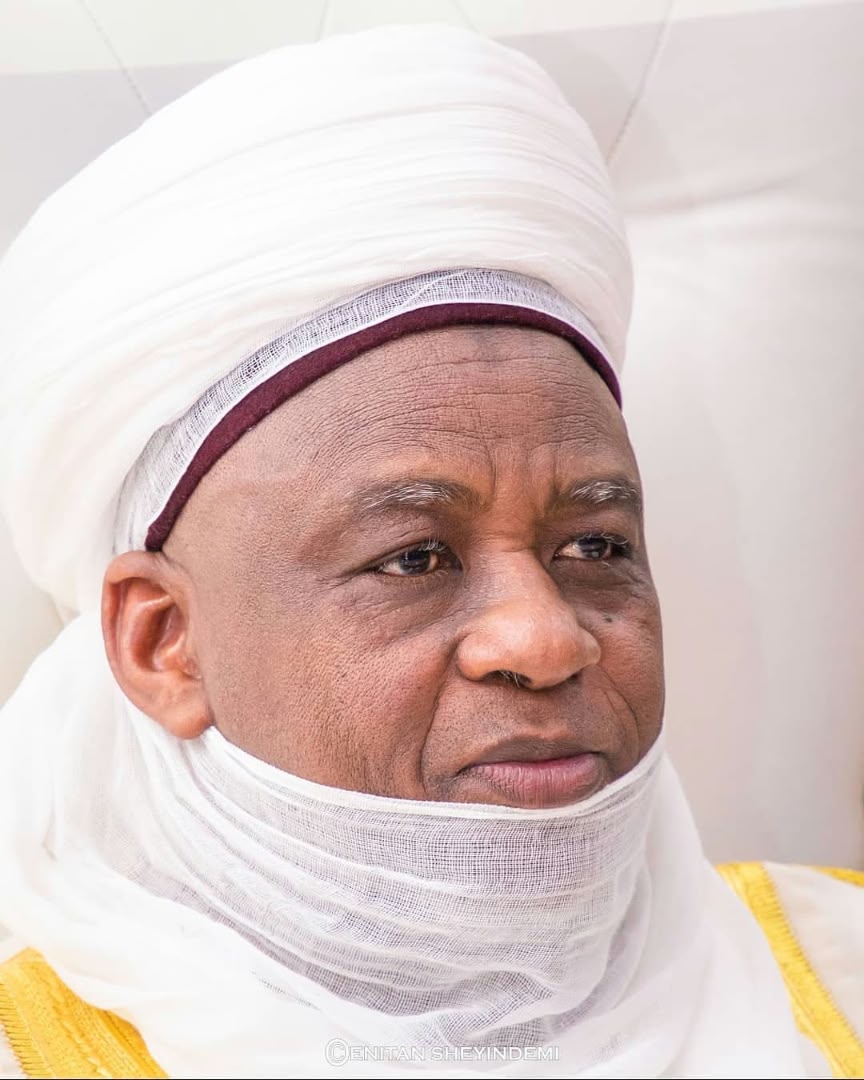
Royalty occupies a unique place in the development and security of nations. In an age when political authority can be contested, governments can change and public confidence can fluctuate, responsible traditional institutions provide something deeper: continuity, identity, cultural memory and moral authority.
A traditional ruler is not merely the occupant of a palace; he is more than that. At his best, he is the custodian of a people's history, the guardian of their values and a bridge between generations. He can mobilize communities for education and development, counsel political leaders in moments of crisis, mediate disputes before they become wars, and speak to citizens in a language of trust that formal institutions sometimes struggle to command.
In a country as diverse and complex as Nigeria, the importance of such leadership cannot be overstated. National security is not achieved only through soldiers, police officers, intelligence agencies and weapons. It is also built through trust, dialogue, religious tolerance, community engagement and responsible leadership.
It is against this background that the 70th birthday anniversary of His Eminence, Alhaji Muhammadu Sa’ad Abubakar III, CFR, mni, the Sultan of Sokoto and President-General of the Nigeria Supreme Council for Islamic Affairs, assumes an importance far beyond an ordinary birthday celebration.
On 24 August 2026, the Sultan turned 70. President Bola Ahmed Tinubu described his seven decades as a testament to “service, wisdom, and grace,” while praising him as a stabilizing voice, a bridge-builder across faiths and communities, and a moral voice for the nation.
The Northern Nigeria Governors' Forum similarly celebrated him as a symbol of peace, unity and national cohesion, while the Alumni Association of the National Institute described him as an unassuming royal leader, distinguished statesman, patriot and symbol of wisdom, peace, unity and service to humanity.
These tributes matter because they demonstrate that the Sultan's influence extends beyond the boundaries of the Sokoto Caliphate and beyond the Muslim community. He has become, in the words of many of his admirers, a father figure whose voice belongs to Nigeria.
The 70th birthday of a prominent leader has historically been more than a personal milestone. Around the world, seven decades of life have often provided an opportunity for society to honour service, reflect on history and celebrate institutions represented by the individual.
The celebration of Sultan Sa'ad Abubakar's 70th birthday is not simply about counting seven decades. It is about examining what one man has done with those decades, what his ancestors entrusted to him, what his country expects from him, and what his nearly twenty years on the throne have meant to millions of people.
It is a celebration of a life that began in the royal household but travelled through the classroom, the military barracks, international peacekeeping and diplomacy before arriving at one of Africa's most historically significant thrones.
Muhammadu Sa'ad Abubakar was born in Sokoto on 24 August 1956.He is the youngest son of Sultan Siddiq Abubakar III, the 17th Sultan of Sokoto, who reigned from 1938 to 1988 and remains one of the longest-serving occupants of the throne. His ancestry connects him to the remarkable historical tradition established by Sheikh Usman dan Fodio, the Islamic scholar and reformer whose movement created the Sokoto Caliphate in the early nineteenth century.
But being born a prince did not mean that life was meant to be lived in comfort alone. The young Sa'ad was educated in Sokoto and later at Barewa College in Zaria, one of northern Nigeria's most distinguished institutions of learning. In 1975, at the age of 19, he entered the Nigerian Defence Academy as a member of the 18th Regular Course.
There, the prince became a cadet with a patriotic determination to grow and defend his nation, The palace gave him heritage and he worked to protect it, the academy gave him discipline and this not only sustain him, but served and continue to serve as the hallmark of his entire life and leadership. Nigeria gave him a mission and had remain a pivotal aspiration to patriotically uphold it.
In 1977, Sa'ad Abubakar was commissioned as a Second Lieutenant in the Nigerian Army and served in the Armoured Corps. His military career would eventually take him far from the traditional world into which he was born.
He served in peacekeeping operations in Africa, including Chad, held important command responsibilities, worked in connection with ECOWAS and ECOMOG, served in a presidential security role and later became Nigeria's Defence Attaché to Pakistan, with responsibilities also connected to Iraq, Saudi Arabia and Afghanistan. He retired from the Nigerian Army in 2006 as a Brigadier General.
This was not merely a career; It was preparation. The military taught the future Sultan lessons that would later become essential to his traditional leadership: discipline, courage, patience, responsibility, command, diplomacy and the value of peace. His experience was especially significant because he was not merely a soldier of war. He was also a soldier of peace.
His international assignments exposed him to the difficult realities of conflict resolution and the consequences of instability. His experience in peacekeeping would later help shape his approach to religious and community conflicts in Nigeria. The prince who had entered the military eventually became a general. Then history called him somewhere else, to the revered throne of the caliphate.
On 29 October 2006, Nigeria was shaken by the death of Sultan Muhammadu Maccido, the 19th Sultan of Sokoto and elder brother of Sa'ad Abubakar, in the ADC Airlines Flight 53 tragedy. A few days later, the military officer who had spent decades serving the Nigerian state was chosen to occupy the throne of his forefathers.
On 2 November 2006, Muhammadu Sa'ad Abubakar ascended the throne as the 20th Sultan of Sokoto. It was a profound transformation, then and till now; the soldier removed his uniform, with all respect and honor, The Sultan put on the turban, an apparel of dignity, to begin the long journey of the throne of his forefathers. But the mission remained service. The military had taught him how to command men. The Sultanate required him to persuade people. The army had taught him how to confront danger. The throne required him to prevent danger from arising.
The soldier's battlefield was replaced by the battlefield of ideas, poverty, insecurity, religious misunderstanding, communal tensions and national division. He had entered the palace, but he had not left service behind.
Perhaps the defining feature of Sultan Sa'ad Abubakar's reign has been his persistent advocacy for peace. Nigeria has endured Boko Haram insurgency, banditry, communal conflicts, religious tensions, political disagreements, ethnic suspicion and social fragmentation. In such an environment, the voice of a religious and traditional leader can either heal or inflame. The Sultan has consistently positioned himself as a voice for dialogue and peaceful coexistence.
Religions for Peace identifies him as a co-president of the organization and highlights his commitment to peace between conflicting religious and cultural forces. It also notes his partnership with Cardinal John Onaiyekan in promoting interfaith cooperation. That partnership is particularly important.
In a country where Muslim-Christian relations are sometimes portrayed through the prism of conflict, the relationship between the Sultan and senior Christian leaders has demonstrated that religious conviction and interfaith friendship can coexist. The message is powerful: You do not have to surrender your faith in order to respect another person's faith. You do not have to agree on every theological question to work together for peace. And you do not have to be of the same religion to love the same country.

The Sultan's relationship with Christian leaders has been one of the most important dimensions of his national role. His engagement with Cardinal John Onaiyekan and other Christian leaders has provided a practical demonstration of interfaith dialogue rather than merely an academic discussion about it. The importance of this cannot be overstated.
Nigeria's diversity is not a weakness. Properly managed, it is an extraordinary national asset. Muslims and Christians constitute the two largest religious communities in the country. If they quarrel endlessly, the nation suffers. If they cooperate, Nigeria becomes stronger. The Sultan has repeatedly encouraged this cooperation. His palace has become not simply a place where traditional matters are discussed, but a venue for dialogue, consultation and reconciliation.
The Sultan's responsibility extends deeply into the affairs of the Nigerian Muslim community. As Sultan of Sokoto and President-General of the NSCIA, he occupies a central position within Nigerian Islam. The Sultanate remains the symbolic heart of the Sokoto Caliphate tradition, while the Sultan's religious authority gives him a major platform for speaking on matters affecting Muslims and the nation. His approach has emphasized moderation, peace, education and social responsibility.
The true strength of religious leadership is not measured by the number of people who can be commanded. It is measured by the number of people who can be inspired to do good. That principle is visible in the Sultan's public engagement with education, community development, humanitarian concerns and peaceful coexistence.
Northern Nigeria faces some of Nigeria's most serious development challenges: poverty, insecurity, educational deficits, unemployment, displacement and the consequences of years of underdevelopment. A traditional ruler cannot replace government, but he can mobilize society. He can speak to parents. He can encourage communities to educate their children. He can challenge religious leaders to reject extremism. He can call on political leaders to confront insecurity. He can remind young people that their future does not lie in violence. The Sultan has used his influence in precisely these broader areas of social responsibility.
There is a profound Fulani wisdom that says:“Laawol amiiɗo, ko Allah waɗi; kono ko ɗoowo waɗi.”In the spirit of the saying: the path of leadership is ultimately from God, but the leader must walk that path with responsibility. That principle beautifully captures the meaning of the Sultanate. Leadership is an Amanah-a trust.
A man may inherit a throne, but he cannot inherit wisdom. He may inherit a title, but he must earn respect. He may inherit authority, but he must demonstrate justice. The throne may come from ancestry, but the quality of the reign comes from character. And that is why the old Islamic understanding of leadership remains so powerful: authority is a trust from Almighty God, and those entrusted with it will ultimately be accountable for how they used it.
No throne is without challenges. The Sultanate exists in a modern democratic republic where traditional rulers possess enormous social influence but limited formal constitutional powers. This creates a delicate balancing act. The Sultan must speak without becoming partisan. He must defend the interests of Muslims without alienating Christians. He must preserve tradition without resisting necessary change. He must condemn insecurity without compromising the constitutional role of government. He must address controversial national questions while remaining a father figure to people across political divides.
The Sultan's international role also deserves recognition. Long before he occupied the throne, he had acquired experience in international military diplomacy and peacekeeping. As a soldier, he worked in African peace operations and held assignments connected to ECOWAS. As Defence Attaché, he gained experience in the complex geopolitical environment surrounding Pakistan, Afghanistan, Iraq and Saudi Arabia.
As Sultan, that experience evolved into a broader role as a religious and traditional statesman. His participation in international peace organizations, including Religions for Peace, has given him a platform to advocate religious coexistence beyond Nigeria. His message is particularly relevant in today's world, where religious identity is frequently manipulated by extremists and political actors. The Sultan's example demonstrates that religious authority can be used to build bridges rather than walls.
To understand Sultan Sa'ad Abubakar, one must understand the institution he occupies. The Sokoto throne is not an ordinary traditional stool. Its historical roots lie in the Sokoto Caliphate established through the reform movement of Sheikh Usman dan Fodio. For generations, the Sultanate has served as a Centre of Islamic scholarship, traditional authority and community leadership.
In the precolonial era, the Caliphate exercised political, religious and judicial authority over a vast territory. Today, the Sultan does not rule Nigeria or govern Sokoto State in the constitutional sense. Yet the throne retains enormous symbolic and moral significance.
The tributes that have poured in for the Sultan's 70th birthday reveal how wide his circle of respect has become. President Tinubu praised his service and national role. The Northern Governors hailed him as a symbol of peace, unity and national cohesion. Katsina Governor Dikko Radda called him a bridge-builder whose leadership anchors peace and progress. The Alumni Association of the National Institute celebrated him as a statesman, patriot and symbol of wisdom, peace and unity.
Northern Christian leaders called him an indispensable bridge-builder and voice of peace. Senate President Godswill Akpabio praised his service, wisdom, faith and dedication to Nigeria's peace, unity and development. The Northern Senators Forum likewise celebrated his life of service, sacrifice, leadership and national unity. Taken together, these commendations tell a powerful story.
The Sultan is being celebrated not simply because he is a Sultan. He is being celebrated because of what he has done with the Sultanate.
Seventy years is a landmark. But for a man who has spent nearly two decades on one of Africa's most historic thrones, it is also a moment to look forward. Nigeria still needs peace. Muslims and Christians still need one another. Traditional institutions still need to adapt to a changing society.
The Sultan's greatest challenge in the years ahead may therefore be to continue transforming the immense moral authority of the Sultanate into practical influence for education, peace, development and national reconciliation. His journey has already shown that a man can move from palace to barracks, from barracks to international diplomacy, and from military service back to traditional leadership without losing the essential meaning of service.
His Eminence, Alhaji Muhammadu Sa'ad Abubakar III, has travelled a remarkable road. He has spent his life moving toward one great responsibility: service. The 70th birthday of the Sultan should therefore not merely be remembered for the ceremonies, congratulations and gifts.
It should be remembered as a celebration of the possibility of leadership. Leadership that respects tradition but understands modernity. Leadership that is deeply Islamic but embraces peaceful relations with Christians. Leadership that understands security but knows that peace cannot be achieved by force alone.
Leadership that loves the North but recognizes Nigeria as a whole. Leadership that inherits authority but treats that authority as a sacred trust. The people of Sokoto are celebrating their Sultan. The Nigerian Muslim community is celebrating its spiritual and traditional leader. Northern Nigeria is celebrating a father figure. Christian leaders are celebrating a bridge-builder.
And Nigeria is celebrating a statesman whose voice has become part of the country's national conversation. So, Your Eminence, as you enter your eighth decade, may Almighty Allah strengthen your body, enlarge your wisdom and continue to guide your footsteps. May He grant you good health, long life and renewed strength. May He preserve you for your family, your people, the Sokoto Caliphate, the Muslim Ummah and Nigeria. May your throne continue to be a throne of peace.
May your palace remain a house of counsel. May your wisdom continue to guide the young. And may the Almighty grant you many more years upon the throne of your forefathers, in dignity, good health, wisdom and peace. Happy 70th Birthday, Your Eminence, Alhaji Muhammadu Sa’ad Abubakar III, CFR, mni, Sultan of Sokoto.
Madiba Ibrahim Lapinni
09011364063

Comments (0)
No comments yet. Be the first to share your thoughts!