


.jfif)
The Katsina State Government has intensified efforts to position the state as a leading destination for digital investment, calling on telecommunications companies and internet service providers to expand broadband and fibre-optic infrastructure across its communities.
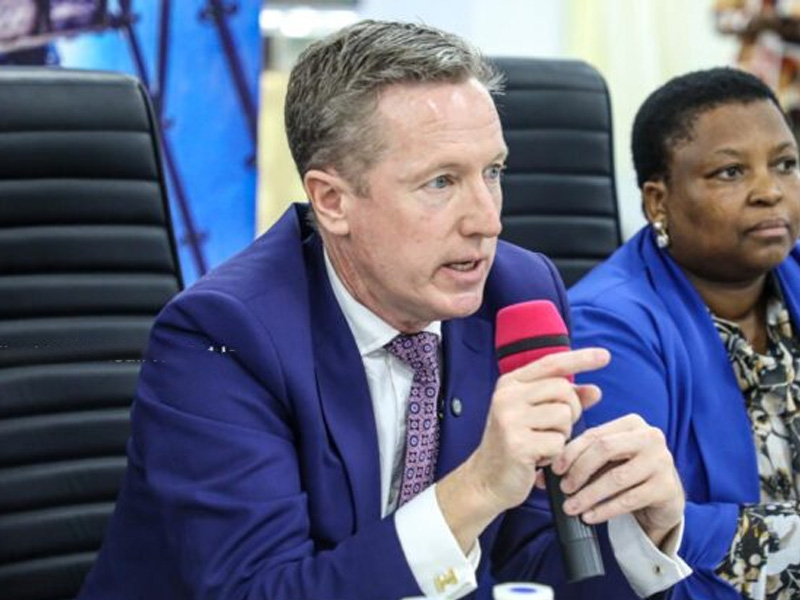
The appeal came during a stakeholders’ workshop held in Katsina on Thursday, where government officials, regulators, telecom operators and investors gathered to discuss strategies for accelerating digital connectivity and unlocking new economic opportunities.
Speaking at the event, the Deputy Governor of Katsina State, Faruk Jobe, disclosed that the administration had implemented a series of reforms aimed at attracting private investment into the telecommunications sector and removing longstanding obstacles to infrastructure development.
Represented by the Permanent Secretary of the Ministry of Budget and Economic Planning, Alhaji Yusuf Ahmed, Jobe revealed that the state government had abolished right-of-way charges for fibre-optic deployment, a move designed to reduce costs for investors and encourage faster network expansion.
He said the policy formed part of a broader strategy to create a transparent, predictable and business-friendly environment capable of attracting large-scale investments in digital infrastructure.
According to him, the reforms are backed by clear implementation guidelines and regulatory frameworks that provide certainty for investors seeking to establish or expand operations in the state.
“Any operator planning to invest in Katsina should clearly understand the requirements, approval procedures and regulatory expectations, while being assured that government policies are designed to support rather than hinder genuine investment,” he stated.
The deputy governor noted that broadband infrastructure has become a critical driver of economic growth, stressing that improved connectivity would support businesses, attract new investments and create employment opportunities, particularly for young people.
He added that expanded internet access would also improve education, healthcare delivery, financial inclusion and the efficiency of public services across the state.
Despite the policy reforms, Jobe stressed that the state’s digital transformation goals could only be achieved through stronger private-sector participation and increased infrastructure investments.
“Having laid the foundation through these reforms, the next phase must focus on action. We need investment, network expansion and stronger collaboration between government and industry players,” he said.
He urged telecommunications firms, infrastructure providers and internet service operators to deepen their presence in Katsina and explore opportunities in underserved areas, particularly in last-mile connectivity.

The deputy governor also assured investors that the government remained willing to engage stakeholders in addressing any remaining regulatory, technical or operational challenges affecting the commercial viability of broadband projects.
He called for practical partnerships capable of producing concrete outcomes, including clear commitments from both government and investors on future projects and expansion plans.
Earlier, the Director-General of the Katsina State Investment Promotion Agency (KIPA), Ibrahim Tukur-Jikamshi, described digital connectivity as one of the most important factors influencing investment decisions in today’s economy.
He noted that reliable internet access had become just as essential as electricity, road networks and other critical infrastructure for businesses seeking to remain competitive.
According to him, modern enterprises increasingly rely on digital platforms to reach customers, access financial services and participate effectively in local and global markets.
Tukur-Jikamshi said the state’s ongoing fibre-optic expansion must ultimately result in affordable, reliable and accessible internet services for businesses, institutions and households.
He explained that the workshop was organised to identify investment opportunities throughout the fibre-optic ecosystem, particularly in extending connectivity to end users and underserved communities.
The KIPA chief added that the engagement would provide existing operators with an opportunity to highlight commercial, technical and administrative obstacles slowing network expansion, while helping prospective internet service providers better understand licensing and regulatory requirements.
“Digital infrastructure should not be judged solely by the length of fibre-optic cables installed. Its real success lies in the number of homes, schools, hospitals, businesses and public institutions that gain meaningful access to connectivity,” he said.
The workshop, organised by KIPA in collaboration with the Katsina State Urban and Regional Planning Board (URPB) and the Katsina State Directorate of Information and Communication Technology (KATDICT), attracted key stakeholders from government agencies, regulatory bodies, telecommunications companies, internet service providers and the business community.
Participants examined the opportunities and challenges shaping the future of broadband expansion in Katsina, with discussions centred on creating a stronger digital ecosystem capable of driving economic growth, innovation and inclusive development across the state.


Comments (0)
No comments yet. Be the first to share your thoughts!