


BY TAIBAT UMMI YAKUBU
Nigeria’s opposition parties have stepped up negotiations to produce a single presidential candidate to challenge President Bola Tinubu in the 2027 general election, with Atiku Abubakar, Peter Obi, Donald Duke and Adewale Adebayo among the politicians being considered.
The G-100 Coalition, which brings together several opposition parties, says discussions have made encouraging progress as it moves to turn its ambition of unseating the ruling All Progressives Congress (APC) into a coordinated political strategy.
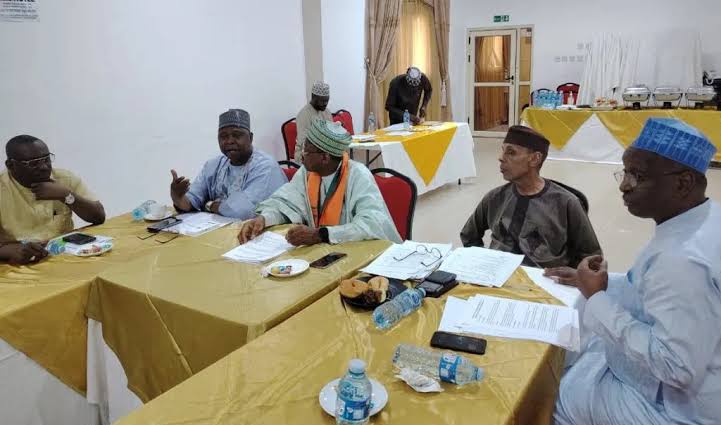
The coalition took another step on Wednesday in Abuja with the inauguration of legal and media committees tasked with developing the framework for cooperation among the participating parties and addressing issues that could threaten the proposed alliance.
The African Democratic Congress (ADC), Nigeria Democratic Congress (NDC), Peoples Redemption Party (PRP), Social Democratic Party (SDP), Peoples Democratic Party (PDP) and Allied Peoples Movement (APM) are among the parties involved in the initiative.
Speaking at the inauguration, SDP National Chairman, Professor Sadiq Umar Abubakar Gombe, said party leaders had been engaging presidential hopefuls, while the aspirants themselves had also started discussions on possible cooperation before the end of the year.
“Our ambition is to present a candidate that can defeat APC and form the next government,” Gombe said, expressing confidence that the negotiations were moving in the right direction.
He said responses from the participating parties and presidential hopefuls had encouraged the coalition, adding that outstanding disagreements could be resolved before the 2027 elections.
However, with several prominent politicians potentially in the race for the opposition ticket, the question of who will eventually emerge as the common candidate remains unresolved. The coalition has yet to announce a selection formula or explain how competing presidential ambitions will be reconciled.
Gombe said the newly inaugurated committees were intended to move the alliance beyond political declarations and establish a practical structure for negotiations.
“Today, we take a deliberate step from intention to structure. The work of this coalition will be judged not only by the strength of our convictions, but by the discipline, precision, and unity with which we carry it out,” he said.
The legal committee will examine the constitutional and legal implications of the proposed alliance, review outstanding legal challenges involving the participating parties and assess relevant actions by the Independent National Electoral Commission (INEC).

It will also vet draft agreements, identify potential legal risks and recommend safeguards and dispute-resolution mechanisms to prevent disagreements from derailing the coalition after months of negotiations.
Warning against overlooking legal details, Gombe said, “We cannot afford surprises. A single overlooked clause can undo months of honest negotiation.”
The media and publicity committee, meanwhile, will coordinate joint communications, media appearances and public announcements. It is also expected to establish procedures for approving collective statements and maintaining consistency in the coalition’s public messaging.
Both committees have been directed to work within their respective mandates, coordinate their activities and report regularly to the coalition’s leadership.
Beyond the negotiations over a common candidate, Gombe argued that Nigeria’s economic and security challenges made a credible opposition alternative necessary.
He pointed to persistent insecurity, rising living costs, unemployment and declining purchasing power as issues that should shape public assessment of the Tinubu administration ahead of the next election.
“Any decision concerning the continuation of the present administration under President Bola Ahmed Tinubu must be assessed against its record, its policy outcomes, and its capacity to address the country’s pressing problems,” he said.
The SDP chairman maintained that no administration should be exempt from public scrutiny and argued that political office should be regarded as a responsibility entrusted by voters rather than an entitlement.
He urged opposition parties to put aside personal ambitions and partisan differences, insisting that the coalition’s success would depend on its ability to maintain unity, credibility and a shared political direction.
“The strength of this coalition will not be measured by the number of parties represented here, but by our unity of purpose, discipline, credibility, and commitment to the Nigerian people,” Gombe said.
The G-100 initiative now faces two major tasks: resolving the legal and organisational questions surrounding cooperation among the parties and finding a way to accommodate the ambitions of prominent presidential hopefuls.
While its leaders say negotiations are progressing, the real test will be whether the participating parties can agree on one candidate and sustain their alliance through the primaries and the wider campaign for the 2027 presidential election.
.jpg)


Comments (0)
No comments yet. Be the first to share your thoughts!