


Nigeria has taken a major step in its fight against organised crime with the validation of its first National Organised Crime Strategy, a landmark framework developed in partnership with the United Nations and the United States to strengthen the country’s response to evolving security threats.
The strategy, which is scheduled for official launch on Aug. 17, is designed to provide a coordinated national response to a wide range of criminal activities, including terrorism, illicit drug trafficking, cybercrime, human trafficking, arms smuggling, financial crimes and other transnational criminal operations.
Speaking during the validation exercise in Abuja on Friday, the National Coordinator of the National Counter Terrorism Centre (NCTC), Maj.-Gen. Adamu Laka, described organised crime as one of the most significant threats confronting Nigeria and the wider region.
He noted that criminal networks have become increasingly sophisticated and interconnected, posing serious risks to governance, economic growth and public safety.
According to Laka, the strategy was developed through extensive collaboration involving the Federal Government, the United Nations Office on Drugs and Crime (UNODC), the U.S. Bureau of International Narcotics and Law Enforcement Affairs (INL), and other key stakeholders.
He explained that the framework would enhance intelligence sharing, strengthen cooperation among security agencies and foster greater collaboration between government institutions, civil society groups and international partners.
“The strategy provides a comprehensive and evidence-driven roadmap for preventing and combating organised crime while promoting stronger institutional coordination and collective action,” he said.
Laka added that the framework aligns with the UNODC Country Programme for Nigeria 2026–2030 and complements existing national security initiatives, including the National Counterterrorism Strategy and the NCTC Strategic Action Plan 2025–2030.
He further disclosed that the NCTC, which is being transformed into a Regional Centre of Excellence for Counterterrorism in West Africa and the Sahel, would play a central role in implementing the strategy through intelligence fusion and operational support.
Also speaking, the UNODC Representative in Nigeria, Cheikh Toure, warned that organised crime continues to undermine peace, security and sustainable development across the country.
He observed that criminal groups often exploit weak institutions, porous borders and vulnerable populations to perpetrate offences such as cyber-enabled fraud, human trafficking, environmental crimes and kidnapping.
Toure said the strategy adopts a broad, inclusive approach anchored on four key pillars—prevention, pursuit, protection and promotion.
He emphasised that while the UNODC provided technical support, ownership and implementation of the strategy remained firmly in Nigeria’s hands.
“Nigeria owns this strategy. Our role is to support the country in achieving its vision and strengthening its capacity to confront organised crime effectively,” he said.

The UN official stressed that tackling organised crime requires sustained collaboration among governments, security agencies, communities and international partners, noting that no single institution can address the challenge alone.
On his part, Acting Director of the U.S. Department of State’s Bureau of International Narcotics and Law Enforcement Affairs, Dr Douglas Grane, described organised crime as a global menace that demands collective international action.
Grane said the United States supported the development of the strategy through the Strengthening Regional and Nigerian Coordination to Combat Organised Crime Project.
He described the framework as Nigeria’s first operational blueprint for addressing organised crime through a coordinated approach that combines prevention, law enforcement, victim support and institutional cooperation.
According to him, enhanced intelligence exchange, biometric data collaboration and stronger cross-border partnerships would be critical in tackling emerging threats, particularly cybercrime and financial sextortion.
“As criminal activities increasingly transcend physical and digital boundaries, international cooperation becomes more important than ever,” he said.
The Commandant of the National Institute for Security Studies (NISS), Mr Joseph Odama, also underscored the damaging impact of organised crime on national security, governance and economic stability.
Odama revealed that the strategy was informed by findings from the institute’s 2023 study titled “Organised Crime in Nigeria: The Third Assessment,” which identified drug trafficking, human trafficking, arms smuggling, kidnapping, maritime crime, cybercrime and financial crimes as some of the country’s most pressing security concerns.
He urged policymakers and implementing agencies to ensure that the strategy remains practical, adaptable and capable of responding to emerging criminal trends.
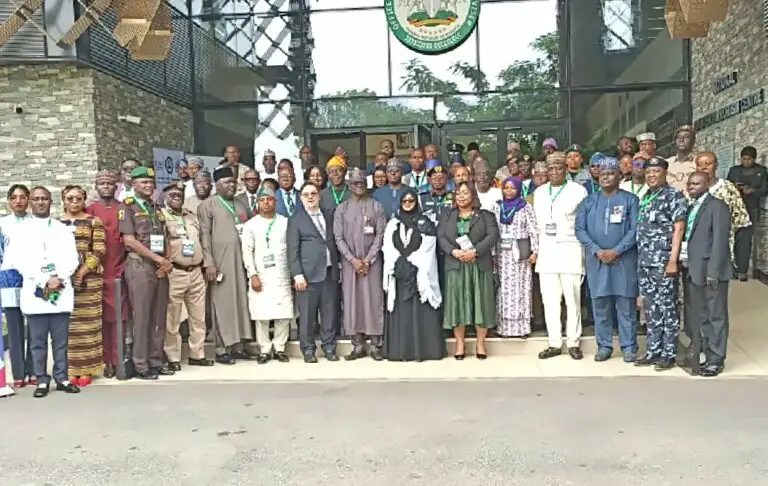
The validation meeting attracted representatives from security and intelligence agencies, international organisations, development partners and civil society groups, who reviewed the document and offered final recommendations ahead of its official unveiling next month.
Observers say the strategy marks a significant milestone in Nigeria’s efforts to build a unified front against organised crime and strengthen national and regional security.


Comments (0)
No comments yet. Be the first to share your thoughts!