


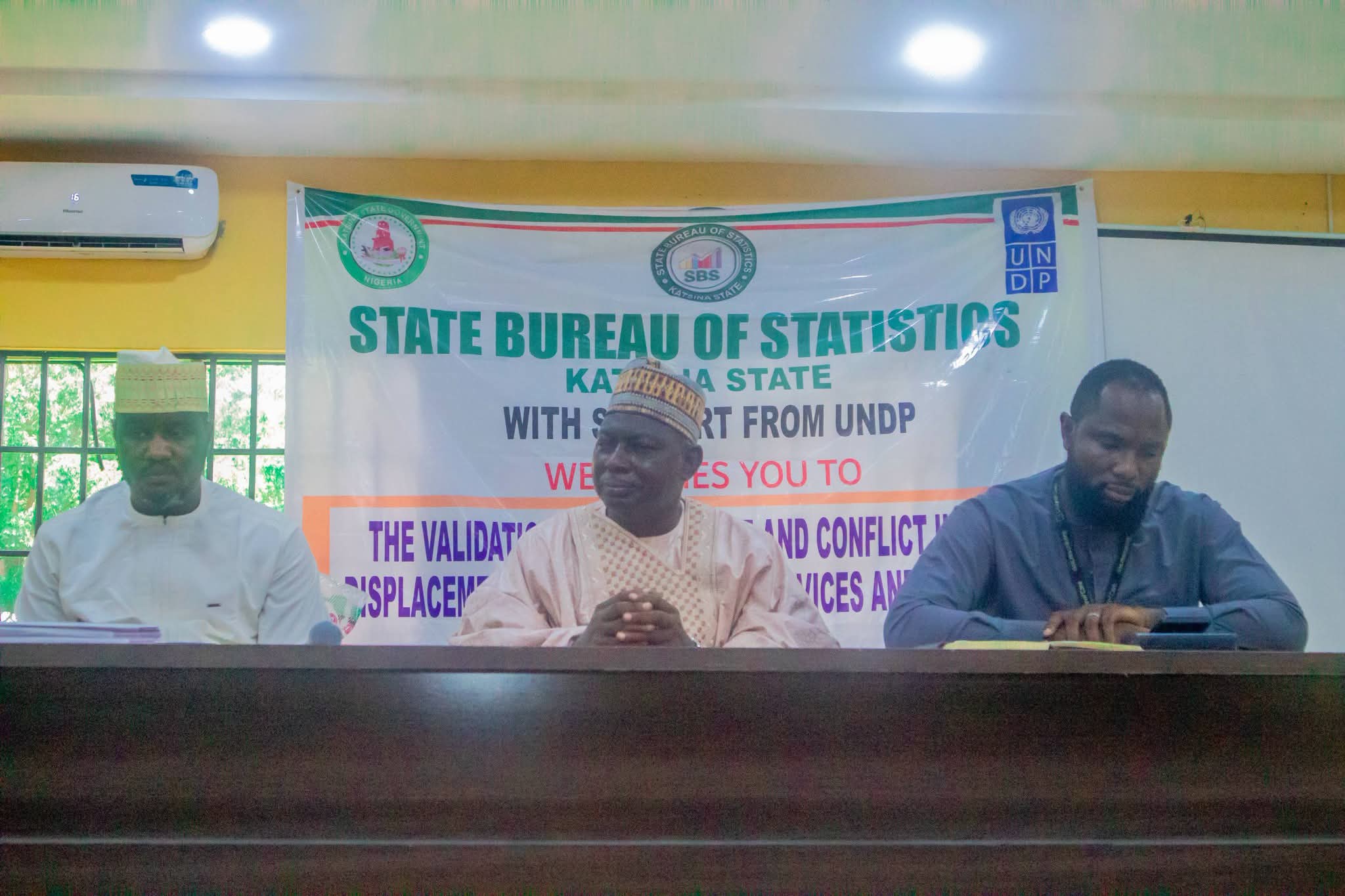
Bureau of Statistics urges evidence-based interventions as stakeholders validate displacement report
The Katsina State Bureau of Statistics has called for locally driven and evidence-based solutions to address displacement caused by conflict and climate change in the state.
The Executive Chairman of the bureau, Prof. Saifullah Sani Matazu, made the call on Wednesday during the validation of a report on **Climate and Conflict-Induced Displacement, Migration, Basic Services and Livelihood Patterns** in Katsina.
The event, held at the Old Government House Banquet Hall, was organised by the bureau with support from the United Nations Development Programme (UNDP).
Matazu said the presence of displaced persons in a particular area should not be determined solely by whether the area was experiencing active insecurity.
He explained that people displaced by insecurity could relocate from their original communities to relatively safer areas, including urban centres, where they might no longer be directly exposed to the insecurity that forced them to flee.
“Some may argue that there is no displacement because there is no insecurity in a particular local government area. But displaced persons may have moved from their places of residence to relatively safer areas,” he said.
He said the distinction was important in collecting and validating migration and displacement data.
Matazu also urged stakeholders to adapt interventions to local conditions rather than relying entirely on approaches developed in other settings.
He said limited resources available to the government and development partners made it necessary to identify practical interventions that could be implemented within the available budget.
According to him, stakeholders should identify the root causes of problems, prioritise interventions and develop solutions based on evidence.
He called for what he described as “technical consensus” among experts from different fields, saying decisions should be based on evidence rather than personal opinions or sentiments.

Matazu also raised concerns about possible abuses in nutrition intervention programmes, stressing the need for closer scrutiny of how such interventions were implemented at the local level.
He urged experts, including geographers, to develop approaches that combine relevant international practices with solutions suited to the local environment.
Also speaking, the Senior Special Assistant to the Katsina State Governor on Victims of Banditry and Internally Displaced Persons, Hon. Sa’id Ibrahim Koguna, said reliable data was critical to addressing displacement and insecurity-related challenges.
Koguna said collaboration between the state government, UNDP, the International Organization for Migration (IOM) and other development partners had helped improve data collection on displacement in Katsina.
He said assessments conducted in August 2023 recorded about 278,000 displaced persons in the state.
According to him, the data provided a basis for understanding the profiles and needs of displaced communities and for planning interventions in areas such as security, livelihoods and access to basic services.
Koguna said accurate data was particularly important because displaced persons might relocate to areas where the insecurity that forced them to leave was not occurring.
He commended the Bureau of Statistics and its development partners for efforts to strengthen data gathering and validation.
A representative of the National Rescue Committee also stressed the need to strengthen technical capacity and community engagement in the implementation of interventions.
The representative said improved capacity, adequate funding and effective communication with communities would be necessary to sustain programmes targeting vulnerable populations.
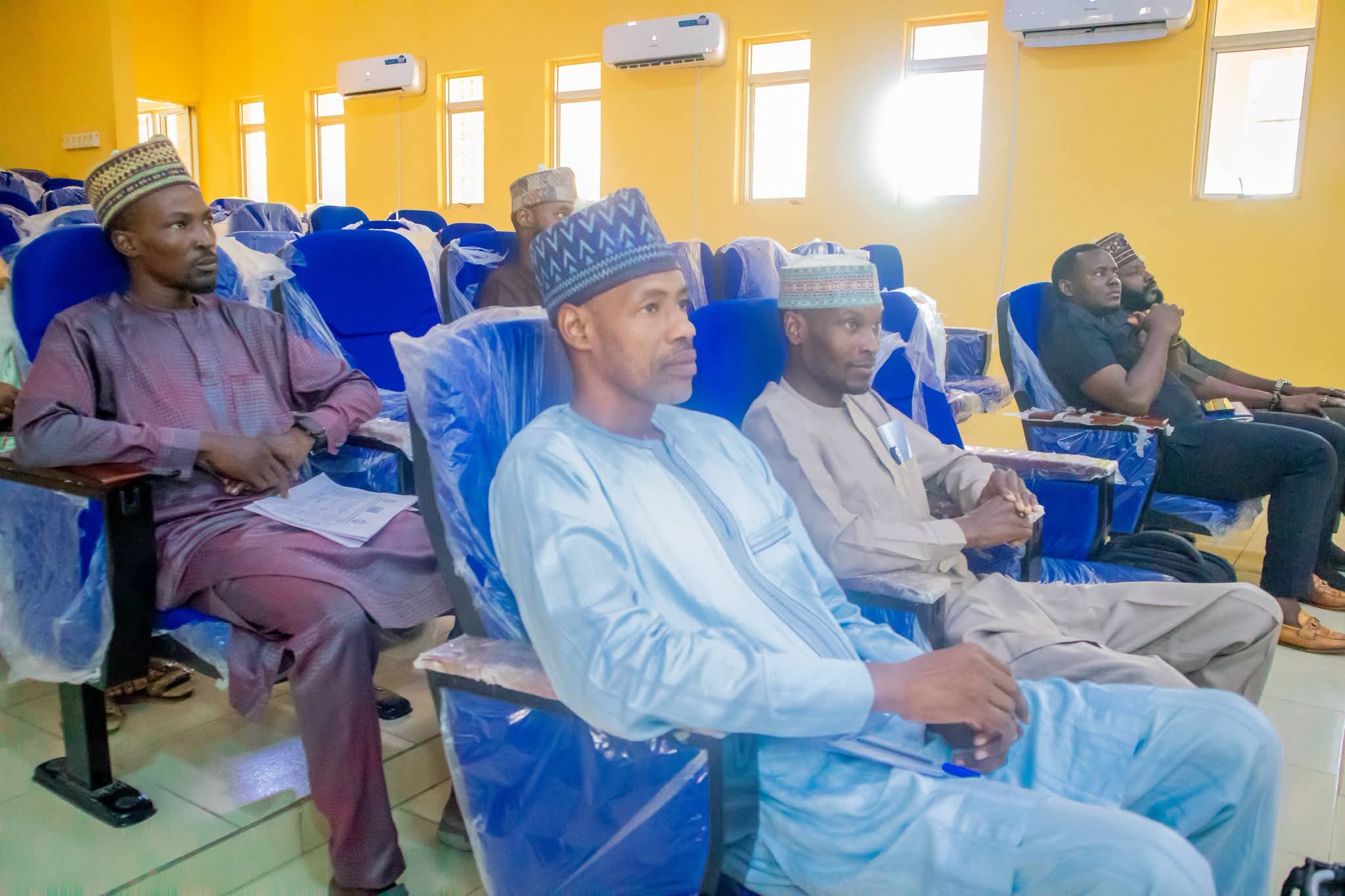
The validation meeting brought together academics, government officials, technical experts, development partners, security personnel and representatives of relevant agencies.
Participants reviewed the findings of the report and emphasised the importance of reliable, localised data in guiding government policies and interventions on conflict, climate-related displacement, migration, livelihoods and access to basic services in Katsina State.


Comments (0)
No comments yet. Be the first to share your thoughts!