


On the surface, it is hardly news. Political parties change designs, campaign organisations make their own choices and not every poster or vehicle needs to carry the photograph of every political leader. For decades, politicians have used pictures to communicate alliances, loyalty and access.
A candidate places the President beside the Governor and his own photograph because he wants the electorate to see him as part of a political chain extending from Abuja to the state capital and down to the constituency.
So, when a photograph that has traditionally appeared everywhere suddenly begins to disappear from some political materials, people naturally start asking questions.
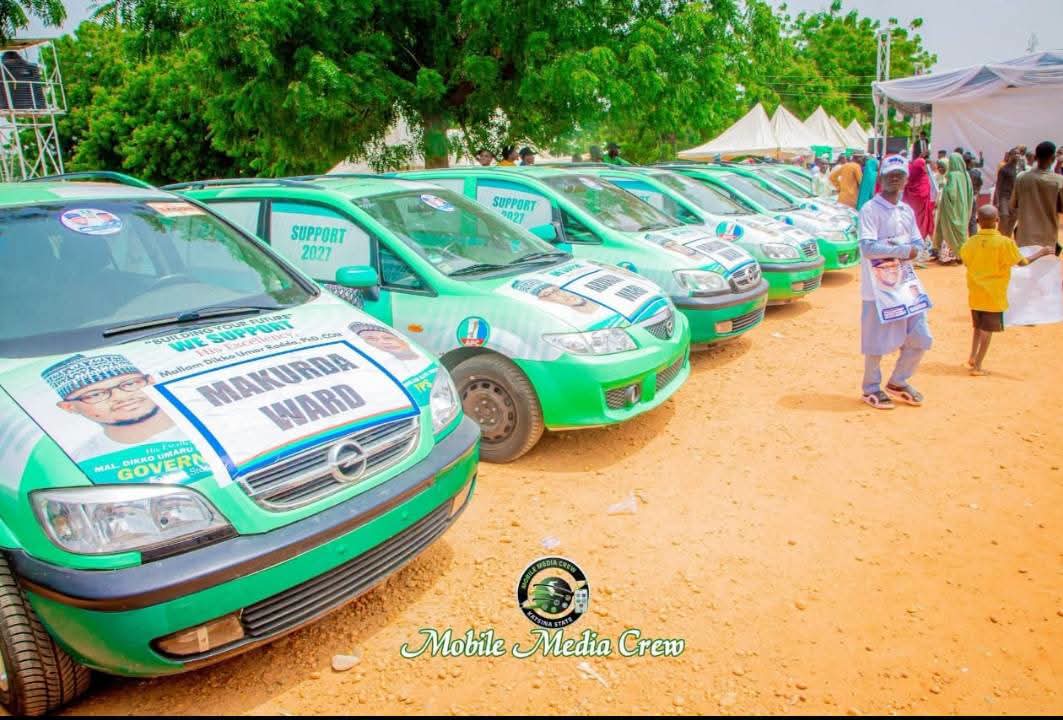
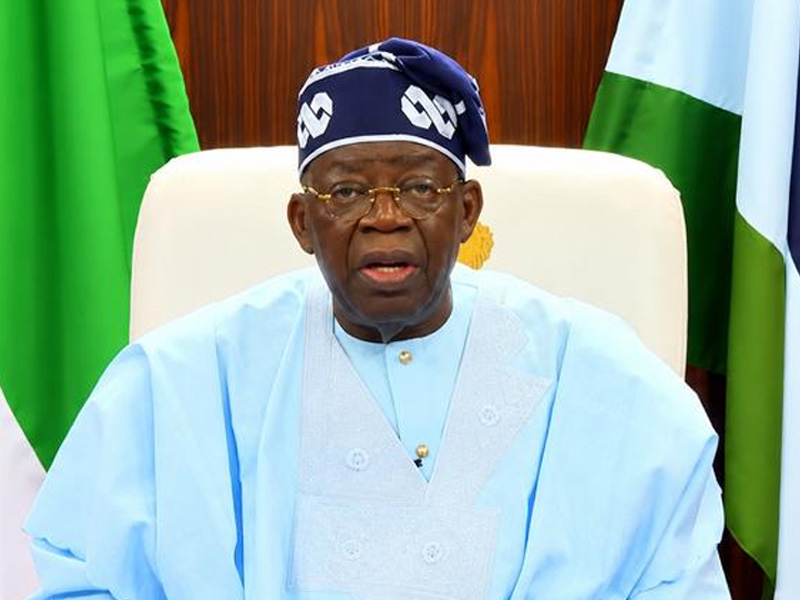
Recently, the Principal Private Secretary to Governor Dikko Umaru Radda, Hon. Abdullahi Aliyu Turaji, distributed 10 vehicles in Rimi Local Government Area for political mobilisation. The vehicles were branded for the local political initiative, but President Bola Ahmed Tinubu's photograph was conspicuously missing.
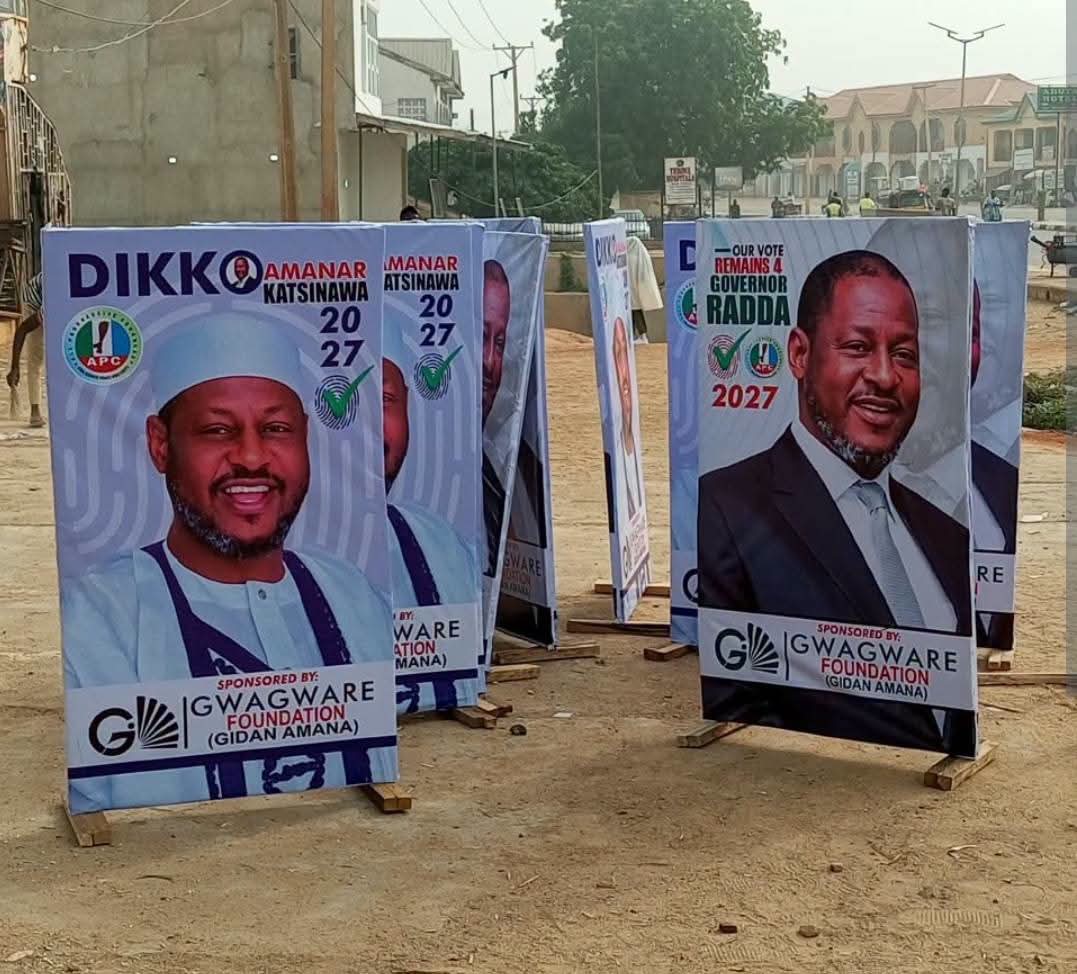
The same observation has been made about vehicles distributed by the Gwagware Foundation, a powerful political support structure associated with Governor Radda. While the foundation has remained strongly identified with the Governor and his political project, some of its recent branded vehicles have also been noticed without the President's photograph.
There has also been discussion around campaign materials associated with Abba Dahiru Mangal, the APC aspirant for the Katsina Central Federal Constituency, where versions of his posters circulating publicly have emphasised his own candidacy and the APC without displaying President Tinubu's photograph.
Again, none of these examples, standing alone, establishes a political disagreement with the President. But when several such instances occur within the same political environment, they invite a broader question:
It is to be noted that none of these developments, individually or collectively, is sufficient evidence that Governor Radda, his supporters or the candidates involved have turned against President Tinubu.
That conclusion would be premature. But the pattern raises a legitimate political question: Is something changing in the way political loyalty is being communicated within Katsina APC? This question deserves attention, particularly as the party prepares for the 2027 elections.
In Nigeria, election posters are more than advertising material because they are political language. When an aspirant places his photograph beside that of the President and Governor, he is telling voters that he belongs to the same political family. This is because the President's picture communicates national connection; the Governor's picture communicates state-level access and support, while the aspirant's picture identifies the person seeking the voter's mandate. The three together create a visual political hierarchy: President, Governor and candidate. For an ordinary voter, this can be easier to understand than a long political speech.
Consider a farmer in Rimi who sees a campaign vehicle moving through his community. He may not know the details of the political negotiations taking place in Abuja or Katsina. He may never attend a meeting of the APC leadership. But he recognises President Tinubu, Governor Radda and the candidate. The three faces tell him: These people are together and that is why political branding matters. It creates a sense of continuity and strengthens the perception that the party is operating as one organisation rather than a collection of competing political camps.
For some time, the familiar political formula in Katsina has been straightforward. Tinubu, Radda and Candidate. This is a formula that has served both political and psychological purposes; for the candidate, association with the President and Governor can enhance credibility. For the Governor, the presence of the President reinforces his connection with the national leadership of the party. For the President, the visibility of his photograph in state-level campaigns demonstrates that the local political machinery is connected to his national project.
For the voter, the message is reassuring: the people seeking his vote are presenting themselves as one team. This is particularly important in a state such as Katsina, where political relationships and personal networks remain influential in electoral mobilisation. The photograph therefore becomes part of the political infrastructure.

Against this background, the absence of Tinubu's photograph from some recent political vehicles and posters has naturally generated discussion. The Rimi vehicles, for example, were intended to support grassroots mobilisation associated with the Governor's political structure. A local campaign organisation may decide to emphasise its immediate political leadership rather than national figures.
The same argument could be made about a candidate's poster. A candidate may decide that his name, face and party symbol are sufficient, but political communication is not judged only by what the designer intended. It is judged by how the audience interprets it. An APC supporter who has become accustomed to seeing Tinubu and Radda together may notice when Tinubu disappears. He may ask: Why? Another may ask: Is there a disagreement between Katsina and Abuja? A third may simply conclude that the candidate is more closely aligned with the Governor than with the President. The conclusion may be wrong but political perceptions do not always wait for evidence.
There is an important fact that should not be lost in this discussion: Governor Radda has repeatedly and publicly supported President Tinubu. Katsina APC stakeholders have endorsed Tinubu for the 2027 presidential election, while Radda has repeatedly urged party members to mobilise for the President. The Governor has also publicly linked his administration's development efforts to the policies and reforms of the Tinubu administration. Therefore, there is substantial evidence that the official political relationship between Tinubu and Radda remains intact.
The question is not necessarily whether Radda supports Tinubu. The more interesting question is whether some elements within the wider political structure around the Governor are beginning to develop a political identity that is increasingly centred on Radda rather than on the Tinubu-Radda partnership. A political structure can remain loyal to a President while simultaneously becoming more state-focused in its organisation. But if that state-focused identity becomes too strong, it can eventually create the perception of separation from the national party.
The discussion inevitably brings into focus the much-talked-about relationship between Governor Radda and Alhaji Ibrahim Kabir Masari, Special Adviser to President Tinubu on Political and Other Matters. The two men are not strangers to Katsina politics. Their political trajectories have been connected for years and the political establishment associated with former Governor Aminu Bello Masari played an important role in the emergence of Radda. Yet recent political developments have generated speculation about competing interests around the Governor and influential political actors in Abuja.
Reports and political discussions about the relationship have ranged from suggestions of political disagreements to claims that the differences have been exaggerated by political opponents. In politics, perceived conflict can be as consequential as actual conflict. If APC members begin to believe that there are two competing political centres, one around the Governor in Katsina and another around influential political actors in Abuja, the party could gradually develop parallel loyalties.
The missing photograph is not the real problem. The real problem would be what the photograph comes to represent. Every political party has competing interests and this is normal. Ambitious politicians will compete for nominations, influence, appointments and recognition. A strong political party manages those competing ambitions within a common structure, while a weak one allows them to develop into factions. If one group becomes identified exclusively with the Governor, another with Abuja-based political actors and others with individual aspirants or wealthy political sponsors, the APC could find itself with several political machines operating under one party label.
Indeed, such a situation would have consequences. It could confuse grassroots members, weaken coordinated mobilization, make party nominations more contentious, deepen suspicion between political office holders and it could provide the opposition with an easy campaign narrative. The opposition would not have to prove that APC leaders are fighting. It would simply point to the different political groups and say they are no longer united.
President Tinubu has a clear political interest in Katsina. The state is not merely another electoral territory. It is one of the important political states in northern Nigeria, with a large electorate and a deeply rooted party structure. If APC wants to maximise Tinubu's support in Katsina in 2027, the President needs a strong and united state organization and this requires cooperation with Governor Radda.
Governor Radda needs a productive relationship with the national APC leadership and the Federal Government. So, the political equation should therefore be mutually reinforcing. But anything that creates the impression that these interests are competing rather than complementary should concern party leaders.
If the APC in Katsina genuinely wants to deliver a strong vote for President Tinubu, the President's political identity should remain visible within the party's campaign architecture. This does not mean that every vehicle or every poster must carry his photograph.
Political campaigns require flexibility and there may be legitimate reasons for designing materials differently. But as a general political strategy, consistently linking the national and state leadership can reinforce the perception that the party is united. If Tinubu increasingly disappears from the visual campaign language of some APC groups while Radda remains prominently displayed, observers may begin to interpret this as evidence that the political centre of gravity is moving from Abuja towards Katsina. Whether that interpretation is correct or not, it is a perception the party should be conscious of.
It would therefore be irresponsible to declare that the absence of President Tinubu's photograph from the Rimi vehicles, Gwagware Foundation vehicles or some Abba Dahiru Mangal campaign posters proves political disloyalty. If, however, it becomes part of a broader pattern in which political groups increasingly identify exclusively with particular individuals rather than the party's collective leadership, then Katsina APC should pay attention. Political parties are strongest when their supporters know that their leaders may have different ambitions but share the same political direction.
Comments (0)
No comments yet. Be the first to share your thoughts!