


BY TAIBAT UMMI YAKUBU
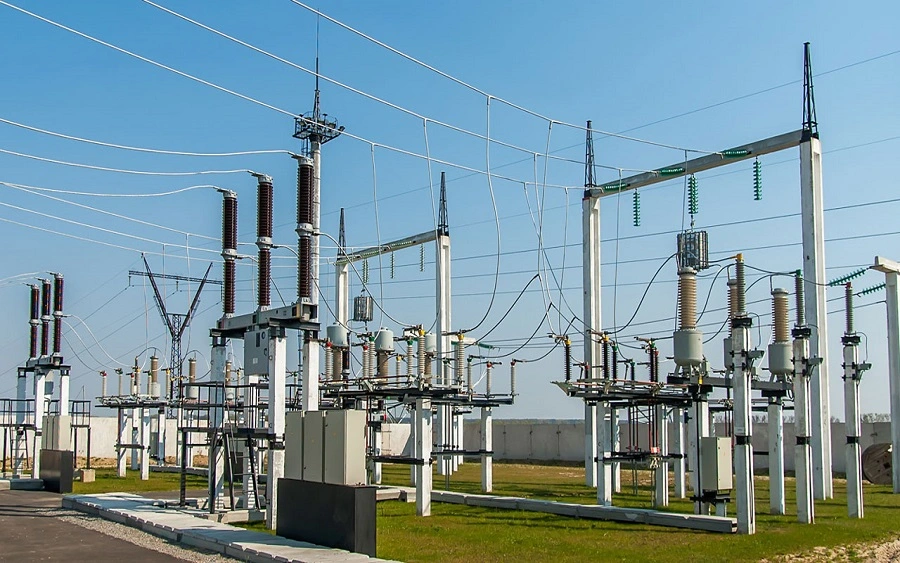
Nearly 600 million people across sub-Saharan Africa still live without electricity, raising fresh concerns about the continent’s ability to achieve industrial growth, create jobs and build competitive economies. Now, policymakers, investors and development experts are preparing to meet in Benin Republic to confront the deep-rooted challenges keeping millions of Africans disconnected from reliable power.
The 12th Africa Think Tank Summit, scheduled for October 28 to 30 in Cotonou, is expected to bring together about 300 participants from more than 50 countries to explore practical solutions to Africa’s persistent electricity crisis. The discussions will focus on why existing power systems continue to struggle and what governments must do to make electricity more reliable, affordable and financially sustainable.
Convened by the African Capacity Building Foundation (ACBF), in partnership with the Government of Benin and the African Union, the summit comes at a time when access to electricity is increasingly recognised as a critical factor in Africa’s economic development. However, experts warn that connecting more households to the grid will not be enough if electricity providers remain financially weak, regulatory systems are ineffective and investment in infrastructure falls short of what is required.
Under the theme, “From Energy Access to Economic Transformation: Practical Policy Pathways for Power Sector Viability, Growth, and Reform in Africa,” the gathering aims to shift the continent’s energy debate from promises and policy declarations to reforms capable of delivering measurable results.
Beyond the millions of households without electricity, the crisis continues to place enormous pressure on African businesses. Companies that cannot depend on public power supply are often forced to invest in generators and other alternative energy sources, pushing up operating costs and making locally produced goods and services more expensive.
For manufacturers and other businesses, these additional expenses can limit expansion, discourage investment and weaken their ability to compete in domestic and international markets. The consequences extend to employment, household incomes and government efforts to diversify economies away from dependence on a narrow range of sectors.
This has made the financial health of electricity utilities one of the most pressing issues facing African governments. Without sustainable revenue, effective management and sufficient investment, power companies may struggle to maintain existing infrastructure, expand their networks and provide the consistent electricity required to support economic growth.

ACBF Executive Secretary Mamadou Biteye said affordable and dependable electricity was essential to Africa’s structural transformation, stressing that expanding access without addressing institutional weaknesses would not deliver the continent’s desired economic progress.
“We need institutions capable of implementing reform, utilities that can deliver sustainably, and African evidence that informs the decisions being made,” Biteye said.
He added that the summit was designed to bring these critical elements together and help move the continent from ambitious energy targets to practical implementation.
Participants are expected to examine ways to improve the financial and operational performance of electricity utilities, strengthen regulatory and policy frameworks, attract private investment and expand electricity trading between African countries. The discussions will also consider ways to increase access to clean cooking solutions as part of broader efforts to improve energy access and living conditions.
A major challenge will be finding ways to ensure that electricity providers can recover costs, maintain infrastructure and attract the funding needed to improve services without making electricity unaffordable for consumers. Resolving this tension will be crucial to building power systems that can support both households and businesses over the long term.
Director of the African School of Regulation, Dr Abdulkadir Shettima, said effective regulation was fundamental to creating financially viable electricity utilities, attracting investment and ensuring that consumers received reliable and affordable power.
He noted that the summit provided an opportunity to advance practical, evidence-based reforms capable of accelerating Africa’s energy transformation.
As the meeting approaches, the central question remains whether African countries can move beyond repeated commitments to electricity expansion and address the financial, institutional and regulatory problems undermining their power sectors.
For a continent seeking faster industrialisation, stronger businesses and more employment opportunities, the outcome could help shape the direction of future energy reforms. With nearly 600 million people still without electricity, the challenge is no longer simply about connecting more people to the grid, but about building power systems capable of sustaining economic growth.
Comments (0)
No comments yet. Be the first to share your thoughts!