By Katsina Times | Abuja Tuesday, 6 January 2026
The Budget Office of the Federation (BOF) has defended the repeal and re-enactment of the 2024 and 2025 Appropriation Acts, dismissing claims that the process amounted to a constitutional breach, fiscal illegality, or a violation of transparency obligations.
In a detailed clarification issued in Abuja on Tuesday, the Director-General of the Budget Office, Tanimu Yakubu, said public debate on fiscal governance was legitimate but warned that discussions around Nigeria’s budget process must be guided by the Constitution, relevant fiscal laws, and established legislative practice.
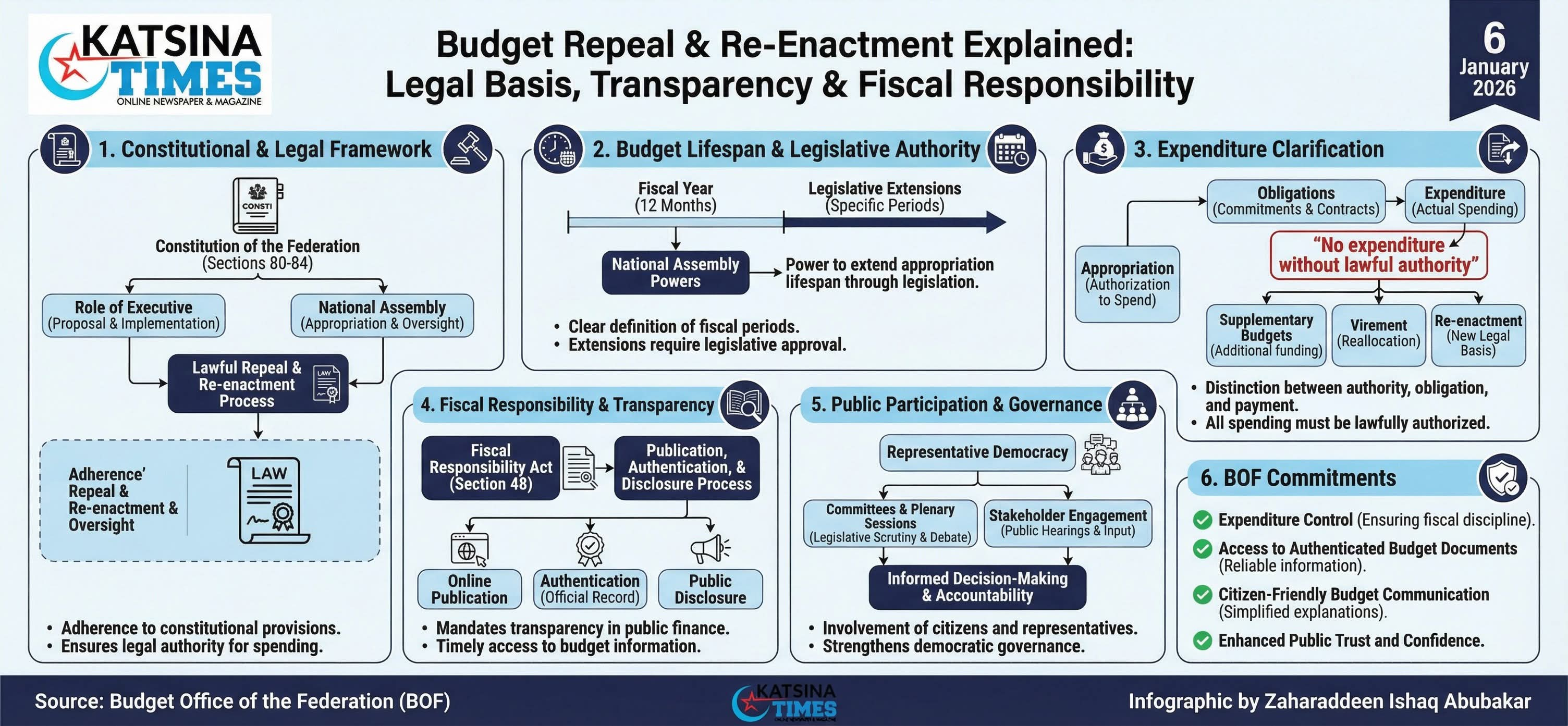
According to the BOF, Sections 80 to 84 of the 1999 Constitution clearly outline the framework for public expenditure, beginning with the preparation of estimates by the President, approval by the National Assembly through an Appropriation Act, and implementation by the Executive strictly within the authority granted by law.
The Office explained that the Constitution does not bar the National Assembly from repealing and re-enacting an Appropriation Act where fiscal realities, implementation challenges, or the need to align fiscal instruments make such action necessary in the public interest. It stressed that once the legislature passes such a bill and it receives presidential assent, it becomes valid law.
On the lifespan of appropriation laws, the BOF noted that while budgets are typically framed to run within a fiscal year, the Constitution does not impose an absolute expiry rule that prevents legislative extensions. It said extensions approved by the National Assembly are lawful and aimed at ensuring orderly completion of projects, settlement of certified claims, and reconciliation of overlapping fiscal obligations.
Responding to allegations of “expenditure without appropriation,” the Budget Office clarified that such claims often confuse contractual commitments, cash releases, statutory transfers, debt servicing, and project obligations that may span more than one fiscal year. It emphasised that the key legal requirement is that all expenditures must be backed by lawful appropriation or other constitutional or statutory authority, with appropriate legislative oversight.
The BOF further stated that the repeal and re-enactment process actually strengthens constitutional control of public funds by consolidating fiscal authority through an Act of the National Assembly.
On transparency, the Office reaffirmed its commitment to Section 48(1) of the Fiscal Responsibility Act, which mandates timely disclosure and wide publication of fiscal information. However, it noted that publication must follow proper legislative authentication processes to avoid the circulation of unauthorised or conflicting draft documents.
The Budget Office also addressed concerns about public participation, noting that Nigeria operates a representative democracy where appropriation matters are handled through constitutionally recognised legislative procedures, including committee reviews and plenary debates. It added that it would continue to support budget literacy initiatives and structured stakeholder engagement.
As part of immediate administrative actions, the BOF pledged to maintain strict expenditure controls, work with relevant institutions to ensure timely publication of authenticated budget documents, and expand citizen-friendly budget communication tools to improve public understanding of fiscal policy.
In conclusion, the Budget Office said Nigeria’s public finance system is anchored on the rule of law and institutional balance between the Executive and the Legislature. It maintained that where economic conditions require budgetary adjustments, lawful legislative action—such as repeal and re-enactment—remains the appropriate constitutional response.
The BOF reiterated its commitment to fiscal discipline, transparency, and constructive engagement with stakeholders in the national interest.