


.jpg)
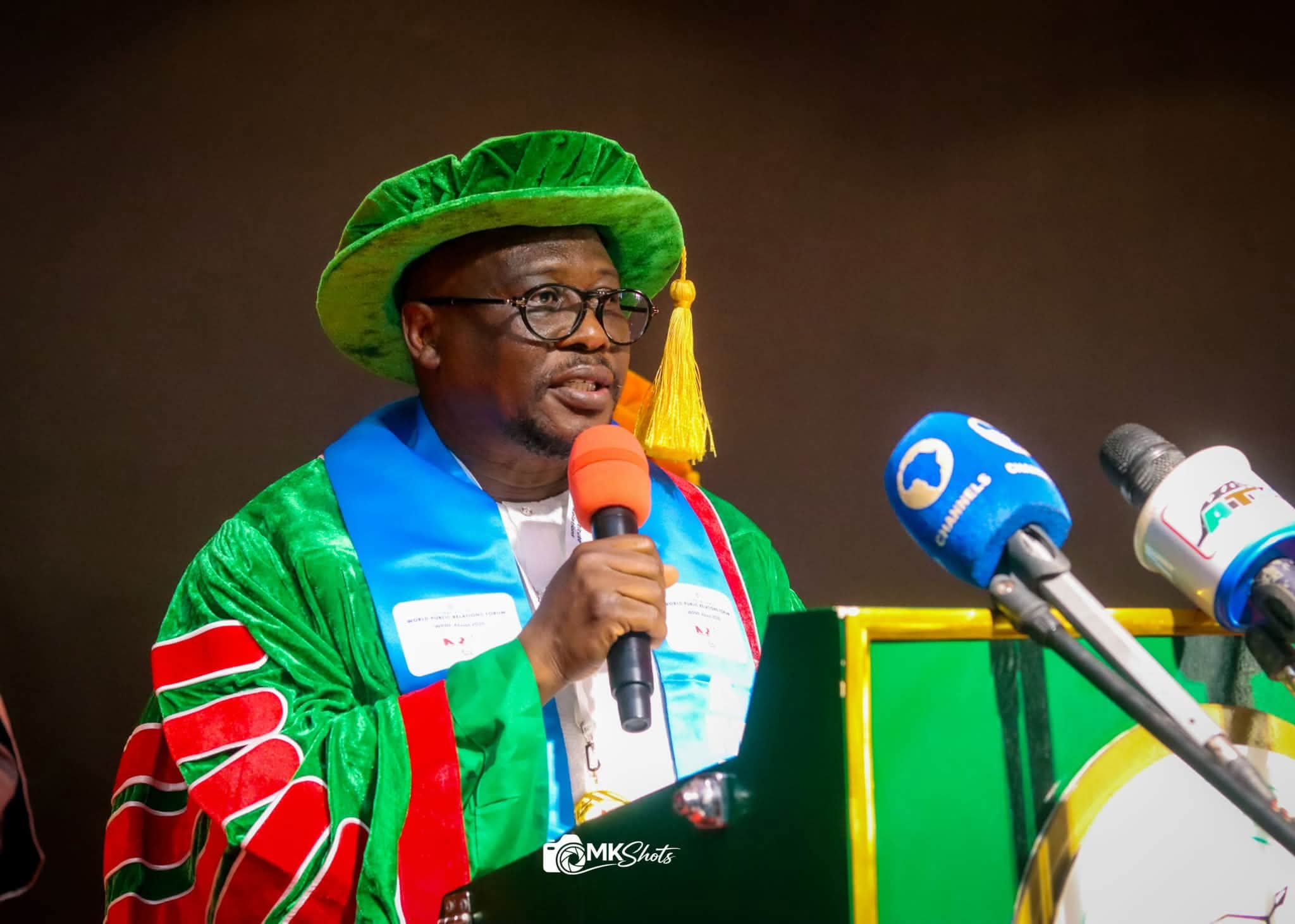
The Chairman of the Independent National Electoral Commission (INEC), Prof. Joash Amupitan, has called for sweeping constitutional and electoral reforms aimed at strengthening the electoral body’s independence and improving the credibility of future elections in Nigeria.
Speaking in Abuja during the public presentation of “Shadows: Protest Essays on Africa’s Most Consequential Country (1999–2023),” a book authored by Managing Director of THISDAY Newspapers, Mr. Eniola Bello, Amupitan argued that INEC’s current funding structure remains one of the biggest obstacles to its effective operation despite the commission being placed on the first-line charge under the Constitution.
Delivering a keynote address titled “Strengthening Electoral Institutions: Pathways to Free, Fair, and Peaceful Elections in 2027,” the INEC chairman said Nigeria must go beyond existing legal provisions and focus on strengthening the institutions and individuals responsible for safeguarding democracy.
According to him, true electoral independence cannot be achieved without genuine financial autonomy for the commission.
Amupitan explained that while Section 81(3) of the Constitution places INEC on first-line charge, the commission is still subjected to the federal budget process, making it dependent on government agencies and legislative approvals before accessing funds.
He noted that the arrangement often limits the commission’s ability to plan effectively and carry out its constitutional responsibilities without administrative bottlenecks.
To address the challenge, he proposed that funding for INEC’s operations should be drawn directly from the Federation Account rather than the Consolidated Revenue Fund (CRF), arguing that such a move would guarantee operational efficiency and ensure seamless conduct of elections.
The INEC chairman also advocated amendments to the Electoral Act to compel political parties to conclude the nomination of candidates at least one year before general elections.
He maintained that many of the disputes that eventually end up in court originate from flawed party primaries characterised by imposition of candidates, lack of transparency, and disregard for internal rules.
Amupitan lamented what he described as the declining quality of internal democracy within political parties, stressing that transparent primaries and strict adherence to party constitutions would significantly reduce post-primary litigations and electoral conflicts.
He argued that if electoral institutions were strengthened and empowered early enough, many political disputes would be resolved long before Nigerians head to the polls.
Shettima Defends Reforms, Says Democracy Thrives on Dissent
Vice President Kashim Shettima, represented at the event by his Special Adviser on General Duties, Aliyu Modibbo, used the occasion to underscore the importance of criticism, free expression, and public accountability in a democratic society.
Speaking on the theme “The Country and Its Shadows,” Shettima described democracy as a system that must accommodate dissenting voices and differing opinions.
According to him, governments that fail to listen to citizens risk losing public trust, adding that criticism should be viewed as a tool for democratic improvement rather than an act of hostility.
Reflecting on Nigeria’s democratic journey since 1999, the Vice President said the Fourth Republic has been shaped by a constant struggle between hope and disappointment, protest and patience, as well as the expectations citizens place on those in power.
He praised the media, civil society organisations, writers, and activists for their role in strengthening democracy by holding public officials accountable.

Shettima said President Bola Ahmed Tinubu remains committed to protecting democratic freedoms and understands the vital role played by journalists and citizens who question government actions.
Addressing the administration’s economic reforms, the Vice President acknowledged that decisions such as the removal of fuel subsidy and the unification of foreign exchange rates came with significant hardship but insisted they were necessary to avert deeper economic challenges.
He pointed to recent economic indicators as evidence that the reforms are beginning to yield results.
According to him, Nigeria recorded a Gross Domestic Product (GDP) growth of 3.89 per cent in the first quarter of 2026, while oil production has recovered to approximately 1.5 million barrels per day. He also disclosed that debt servicing has dropped from 96 per cent of government revenue to below 65 per cent.
Shettima further revealed that over 100,000 Nigerians have already benefited from the national consumer credit scheme, while the student loan programme is expanding access to higher education for thousands of young Nigerians.
On infrastructure, he highlighted ongoing projects including the Lagos-Calabar Coastal Highway, the Sokoto-Badagry Superhighway, and the Abuja-Kaduna-Kano Road, alongside hundreds of other road interventions across the country.
He noted that the federal government’s 2026 budget earmarks N26.08 trillion for capital expenditure, describing it as a strong commitment to long-term economic growth and development.
Book Captures Nigeria’s Democratic Journey
Chairman of the occasion and former Katsina State Governor, Aminu Bello Masari, described Bello’s book as a significant contribution to Nigeria’s democratic history.
Masari said the two-volume publication offers a comprehensive account of major national events, public debates, aspirations, and challenges that have shaped the country’s democratic experience over the last 25 years.
According to him, such works are essential for preserving national memory, stimulating public discourse, and providing future generations with valuable lessons from the country’s successes and failures.
He stressed that democracy thrives not only through elections but also through active citizen participation, informed debate, and a commitment to accountability and justice.
Also speaking, Chairman of United Nigeria Airlines, Prof. Obiora Okonkwo, who represented Air Peace Chairman and CEO, Chief Allen Onyema, praised Bello for his outstanding contributions to journalism and national development.
Okonkwo described the veteran journalist as one of the most respected voices in Nigeria’s media landscape, noting that the publication of the book further cements his legacy as a chronicler of the nation’s political evolution.
Reviewing the publication, renowned political analyst Prof. Okey Ikechukwu described “Shadows” as both a historical commentary and a powerful protest essay that captures the defining moments of Nigeria’s democratic journey.
He hailed Bello’s engaging writing style and described him as an elder statesman of Nigerian journalism whose work will serve as a valuable resource for aspiring journalists, scholars, policymakers, and historians.
The event attracted an array of prominent political leaders, business executives, academics, media practitioners, and other distinguished Nigerians, underscoring the significance of the book and the conversations surrounding the future of Nigeria’s democracy.
.jpg)

Comments (0)
No comments yet. Be the first to share your thoughts!