


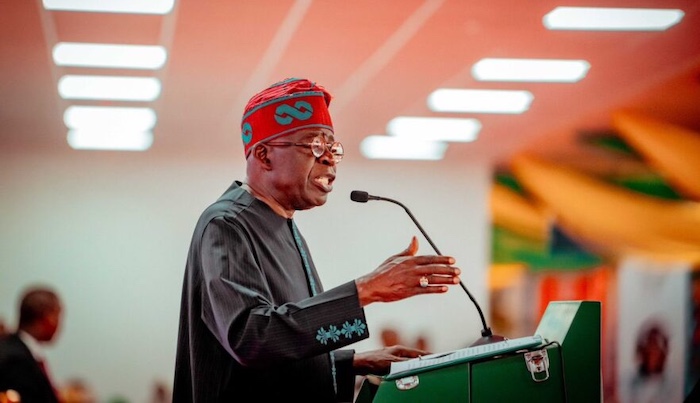
President Bola Ahmed Tinubu has reaffirmed his administration’s determination to tackle insecurity across Nigeria, assuring citizens that ongoing reforms in the country’s security sector will ultimately lead to the defeat of terrorism, banditry, and kidnapping. The President gave the assurance during a meeting with the leadership of the Catholic Bishops’ Conference of Nigeria (CBCN) at the Presidential Villa in Abuja, where he outlined his government’s efforts to strengthen national security, improve economic conditions, and expand access to education.
The meeting, attended by a delegation of 19 Catholic bishops led by the CBCN President and Archbishop of Kaduna, Most Rev. Matthew Ndagoso, provided an opportunity for discussions on some of the nation’s most pressing challenges. Addressing the bishops, Tinubu emphasized that his administration is implementing comprehensive reforms aimed at repositioning Nigeria’s security architecture for greater efficiency and effectiveness.
According to the President, the government is intensifying intelligence gathering, restructuring security institutions, improving logistical support for security agencies, and prioritizing the welfare of personnel engaged in frontline operations. He revealed that approval had been granted for the expansion of the Armed Forces, alongside the acquisition of additional military equipment and the construction of new barracks to enhance operational capacity.
Tinubu expressed confidence that these measures would yield positive results, stressing that the fight against insecurity remains one of the top priorities of his administration. He also called on religious leaders to play a more active role in promoting peace and national unity by condemning violent attacks and encouraging their followers to support efforts aimed at ending insurgency and criminality across the country.
The President noted that Nigeria’s diversity should be viewed as a source of strength rather than division. He urged all citizens to remain committed to the ideals enshrined in the national anthem and work collectively toward building a secure and prosperous nation. According to him, every stakeholder has a responsibility to protect the country’s unity and contribute to its development.
Beyond security, Tinubu defended the economic reforms introduced since he assumed office, arguing that they have helped stabilize the nation’s finances and avert what he described as a looming economic crisis. He maintained that Nigeria had been placed on a sound footing, with indicators pointing toward gradual recovery and improved prospects for growth.
Reflecting on the challenges inherited by his administration, the President stated that difficult but necessary decisions were taken to address economic vulnerabilities and restore confidence in the nation’s economy. He asserted that fears of bankruptcy and uncertainty that characterized the early days of his administration had begun to fade, while the overall economic outlook had improved significantly.
Tinubu further highlighted ongoing government interventions designed to alleviate poverty and improve the welfare of Nigerians. Among these initiatives, he pointed to the Nigerian Education Loan Fund (NELFUND), which aims to expand access to higher education by providing financial support to students. He stressed that education remains one of the most effective tools for lifting people out of poverty and creating opportunities for economic advancement.

Encouraging citizens, particularly young people, to embrace education, entrepreneurship, and skills acquisition, the President said government programmes and private-sector opportunities should be fully utilized to enhance productivity and self-reliance. He observed that population growth continues to place pressure on national resources, making education and economic empowerment even more important for sustainable development.
Tinubu also pointed to the relative stability currently being enjoyed within Nigeria’s university system, noting that prolonged industrial actions that once disrupted academic calendars have become less frequent. According to him, students are now able to complete their academic programmes within the stipulated timeframe, a development he described as a positive outcome for families and the education sector.
On preparations for future elections, the President dismissed concerns about bias within the electoral process, insisting that the Independent National Electoral Commission (INEC) has remained neutral and committed to fairness. He maintained that all political parties and candidates would have equal opportunities to participate in the democratic process, adding that credible elections remain essential to the country’s stability and progress.
Tinubu also addressed the issue of mission schools, expressing support for their return where constitutionally possible. He recalled that during his tenure as Governor of Lagos State, mission-owned schools were returned to their original proprietors, noting that state governments possess the constitutional authority to make such decisions.
Earlier in his remarks, Archbishop Matthew Ndagoso commended the President for the reception accorded to Archbishop Paul Gallagher, the Holy See’s Secretary for Relations with States and International Organisations, during celebrations marking the 50th anniversary of diplomatic relations between Nigeria and the Vatican. However, he raised concerns over several national issues, including insecurity, poverty, access to quality education, democratic consolidation, and the need for credible elections.
The Archbishop urged the Federal Government to ensure fairness and inclusiveness in matters affecting religious worship and to consider the restoration of mission schools. He further emphasized the importance of strengthening democratic institutions ahead of the 2027 general elections, arguing that safeguarding democracy would be one of the President’s most enduring legacies.
The meeting underscored the importance of collaboration between government and religious institutions in addressing the nation’s challenges. It also highlighted the shared commitment of both parties to promoting peace, strengthening democratic values, improving educational opportunities, and advancing the welfare of Nigerians. As the country continues to confront security and economic challenges, the engagement served as a platform for dialogue and renewed calls for unity, resilience, and collective action toward national development.
.jpg)
Comments (0)
No comments yet. Be the first to share your thoughts!