


.jpg)
Thousands of children whose education was disrupted by years of bandit attacks and displacement may soon have a renewed opportunity to return to learning, as the Katsina State Government and UNICEF Kano Field Office have launched a major campaign to restore hundreds of community-based learning centres across some of the state's most troubled areas.
The intervention, which targets nine frontline local government areas ravaged by insecurity, seeks to reactivate 450 Community Learning Hubs established to provide education for vulnerable children unable to access conventional schools.
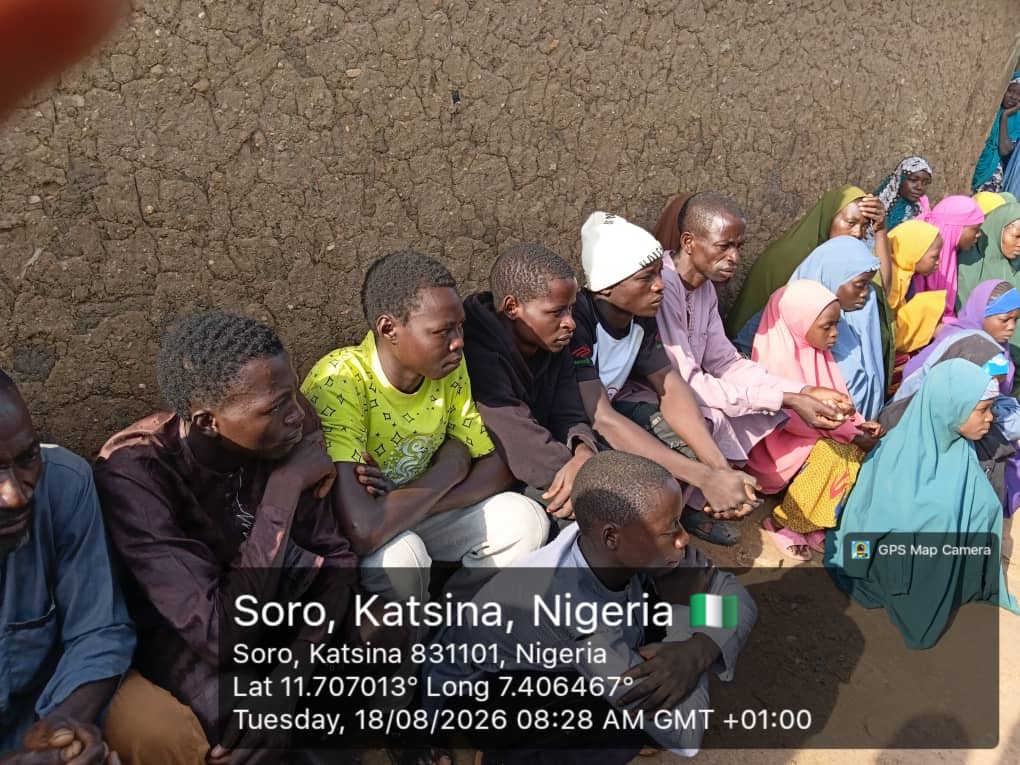
Speaking in Katsina on Tuesday, UNICEF Focal Person at the State Universal Basic Education Board (SUBEB), Hajiya Maijiadda Kai-Kai, said stakeholders had commenced simultaneous sensitisation and assessment exercises across the affected communities to prepare the hubs for full operation.
The initiative covers Jibia, Batsari, Safana, Danmusa, Dandume, Sabuwa, Faskari, Kankara and Bakori local government areas, many of which have witnessed repeated security challenges that forced children out of classrooms and disrupted academic activities.
According to Kai-Kai, the engagement is aimed at mobilising community leaders and residents while evaluating the condition of the learning centres and educational tools previously provided to learners.
She explained that officials are assessing whether the centres remain functional and verifying the availability of solar-powered radio sets distributed under the programme to support remote learning.
Any missing or damaged radio devices identified during the exercise, she said, would be replaced to ensure that affected children continue benefiting from educational broadcasts and other learning opportunities.
The UNICEF official disclosed that at least 50 Community Learning Hubs were established in each of the nine LGAs, creating a network of 450 centres designed to reach children living in areas where access to formal education remains difficult.
She noted that the hubs were specifically created to support out-of-school children, displaced learners and other vulnerable groups by providing access to radio-based lessons, literacy programmes, numeracy training and other educational resources.
The programme gained momentum in June 2024 when 2,960 solar-powered radio devices were delivered to Katsina State. Of that number, 1,000 units were distributed to children affected by displacement and insecurity to help them continue learning outside conventional classrooms.

Kai-Kai described the radio learning initiative as part of a broader partnership between UNICEF and the Katsina State Government aimed at improving educational access and strengthening learning outcomes in underserved communities.
She said the learning hubs serve as safe community spaces where children, adolescents and adult learners can acquire basic education, literacy, numeracy and practical skills while receiving additional academic support.
Beyond academic instruction, the centres are expected to encourage community participation in education and provide psychosocial and learning support for children affected by conflict and displacement.
Under the radio learning model, structured lessons are broadcast to learners, who can either listen from their homes or gather at designated hubs to participate collectively.
The lessons are complemented by printed learning materials, while facilitators stationed at the centres guide learners through exercises, answer questions and provide additional support where necessary.
Kai-Kai added that interactive sessions, discussions and feedback mechanisms have been incorporated into the programme to improve understanding and keep learners actively engaged.
She expressed optimism that the initiative would help bridge educational gaps created by insecurity, distance and displacement, allowing thousands of children to continue learning despite the challenges facing their communities.
Meanwhile, community leaders and stakeholders participating in the sensitisation exercise pledged their support for the revival programme, assuring government and development partners of their commitment to ensuring its success across the affected local government areas.
.jpg)
Comments (0)
No comments yet. Be the first to share your thoughts!