


By Sama'ila Adamu
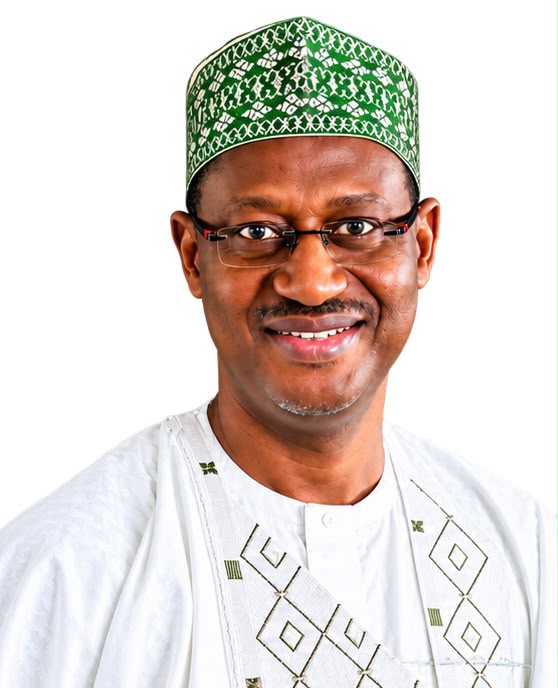
Three years ago when Malam Dikko Umar Radda, PhD, took his Oath of Office as Katsina State Governor at Muhammadu Dikko Stadium, Katsina, he came prepared with a blueprint titled 'Building Your Future' and a promise to govern with dignity, opportunity, and security for every citizen regardless of background.
Three years later, the administration is marking its mid-term with infrastructure projects, institutional reforms, and direct interventions in security, education, health, and agriculture. The Building Your Future agenda was designed by over 200 experts, many of whom now serve in government. Its key point are security, education, health, agriculture, infrastructure, and economic growth.
Since then he has created new institutions to drive implementation: the Katsina State Development Management Board, Strategic Policy Implementation Monitoring and Evaluation Unit - SPIME, the first Katsina State Irrigation Authority, and KASEDA - Katsina State Enterprise Development Agency for MSMEs. The administration also introduced merit-based promotions, starting with competency-based appointments of permanent secretaries. Here is a breakdown of how the 'Building Your Future' agenda was implemented in the state:
Security
When Dikko Umaru Radda took the oath on May 29, 2023, Katsina’s biggest crisis was insecurity. Banditry, kidnapping, and cattle rustling had turned eight frontline LGAs into red zones Danmusa, Faskari, Jibia, Batsari, Kankara, Dandume, Safana, and Sabuwa while six other local government areas that share borders with the front line LGA also faced significant security challenges. Farmers had abandoned fields, schools were closed, and whole villages were deserted.
Having inherited this crisis, the Radda administration launch a multi-dimensional response. He started by creating the Katsina Community Watch Corps, a grassroots outfit with over 1,400 trained operatives, vehicles and combat kit to complement federal forces and improve intelligence gathering.
The corps' key mandate include intelligence gathering; because operatives are from the communities, they know the terrain, language, and faces. They serve as eyes and ears for federal security forces. It was also tasked with early warning and quick response to bandit movements before attacks escalate as well as protection of vulnerable communities which includes escorting farmers to farms during planting/harvest, securing schools, and guarding markets.
Governor Radda also created a Ministry of Internal Security and Home Affairs to coordinate agencies, traditional rulers, and community response to security breaches. The governor also also established SPIME: Strategic Policy Implementation Monitoring and Evaluation Unit, to track security projects and ensure accountability.
Three years later, peace is gradually returning to communities that have suffered the learners of bandit tree and kidnapping for about ten years. Many analysts have commended to the strategy adopted by the governor which entails not just the use of force but the adoption of a homegrown, multi-layered approach built around community, intelligence, logistics, and institutions. This is the long story of how Radda is fighting for security.
Meanwhile these efforts have led to providing security in areas that were hitter to unacceptable to traders farmers and commuters have relief to citizens. It has also restored investor confidence in the States economy while also allowing farmers to continue to cultivate their farms across hundreds of agrarian communities across the front line and the vulnerable local government areas. It has also resulted in reduction in the number of attacks and improved social, economic and political stability in the state.

Infrastructure Development
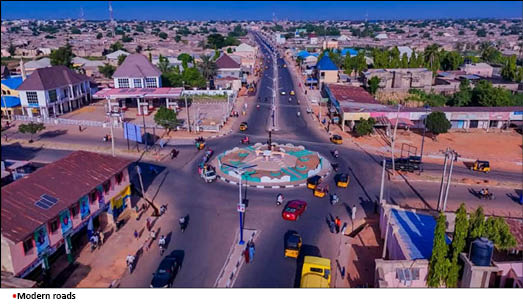
When Governor Dikko Umaru Radda took office, Katsina’s infrastructure what's characterized by aging roads and 1970s-era masterplans, while rural communities were cut off by bad feeder roads during rainy season. However, three years into the implementation of his “Building Your Future” blueprint, the administration has made infrastructure the most visible plank via dualised highways, new city plans, rural access roads, and upgraded public buildings.
The products are broadly categorized into urban renewal and rural access roads. Under the Urban Renewal projects major roads in Katsina metropolis, Funtua, and Daura have been dualised leading to reduced traffic congestion, accidents, and travel time between the state’s three economic hubs. As Katsina, Funtua, and Daura are the senatorial headquarters, linking them with dual carriageways is meant to boost trade, reduce logistics costs, and make the state more investor-friendly.
Similarly many rural road networks have been expanded within the last three years. Now new and rehabilitated feeder roads are connecting farmers directly to markets in Katsina, Funtua, and Daura. The goal is to cut post-harvest losses as over seventy percent of Katsina indigenes are farmers. Meanwhile the administration has also developed an Urban Renewal masterplan for the next 15 years, making provision for residential, commercial, industrial, and green areas to guide orderly expansion.


Education
From the start of his administration, Governor
Radda declared a State of Emergency on education, describing it as the foundation of any sustainable future. The administration committed over N120 billion to the sector in three years, a record investment for the state. The most visible interventions were in infrastructure and access. Over 170 new junior secondary schools were built in communities that previously had none, while 300 schools were rehabilitated and 150 primary schools renovated.

To bridge the urban-rural divide, three Model and Smart Secondary Schools were established in Radda, Jikamshi, and Dumurkul across the three senatorial zones. These schools are equipped with robotics labs, AI facilities, 24-hour power, and internet, giving rural children access to 21st-century learning.
On personnel and affordability, the government recruited more than 7,000 teachers to address chronic shortages. Examination fees for 54,000 students were paid to reduce dropout rates, and over 100,000 girls were supported through conditional cash transfers under the Girl Education Development Initiative. ICT and Computer-Based Test centres were set up in rural and urban LGAs to end the era of students traveling long distances for JAMB and WAEC.
For Governor Radda, education is not just about classrooms, but about equity. By building schools where none existed and digitizing learning, Radda’s administration is expanding opportunity beyond the children of the elite.
Healthcare
Healthcare was the second pillar off the Dikko Radda administration's Building your Future agenda with a focus on primary, secondary, and tertiary healthcare. The administration upgraded over 250 Primary Healthcare Centres across Katsina’s 361 wards, with 158 PHCs specifically renovated and equipped. The goal is to ensure that every citizen has access to basic healthcare within their community.
At the secondary and tertiary level, the governor commissioned a world-class dialysis centre and is completing a state-of-the-art radiology and laboratory diagnostic facility in partnership with Siemens Healthineers. His ambition is to position Katsina as a medical tourism destination within Nigeria, reducing the need for citizens to travel to Abuja or abroad for advanced diagnostics.
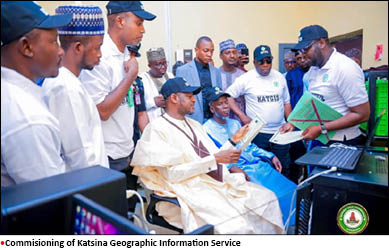
Technology was integrated through telemedicine and digital health records, allowing patients in rural PHCs to consult specialists remotely. The administration also recruited 638 health workers and sponsored medical students abroad to address human resource gaps. In a move that won public trust, the administration cleared over N45 billion in pension and gratuity arrears, improving morale among retired health workers.
Are the heart of these policies in the healthcare sector lies and ambition of providing universal healthcare coverage for communities across the 361 wards of the state and making Katsina self-sufficient in healthcare service delivery.
Agriculture
Governor Radda's core principles in the transformation of agriculture in katsina state are mechanization and value addition, knowing that agriculture employs over 70% of the state's population at a time when farmers faced low yields, poor inputs, and bad roads. From the onset he recruited 720 extension workers, tool for each political word to educate and enlightened farmers on modern best practice in farming and livestock production.
The government procured and distributed over 400 tractors and agricultural equipment across all 34 LGAs. To reduce production costs, 40,000 metric tonnes of fertilizer are distributed annually at subsidized rates. This has led to higher yields and more surplus for processing.
Recognizing that raw produce fetches low prices, the administration established agro-processing centres and created the Katsina State Irrigation Authority, the first of its kind in the state. This supports dry-season farming and reduces dependence on rainfall. Rural road networks were expanded to connect farms directly to markets in Katsina, Funtua, and Daura, cutting post-harvest losses.
Through youth agricultural training programmes, young people are being taught modern farming, packaging, and marketing. The vision is to move Katsina from subsistence farming to agribusiness, where farmers are entrepreneurs, not just laborers.


Coming from the enterprise development sector, as the former Director General of the Small and Medium Scale Enterprisees Development Agency of Nigeria (SMEDAN), Governor Dikko Umaru
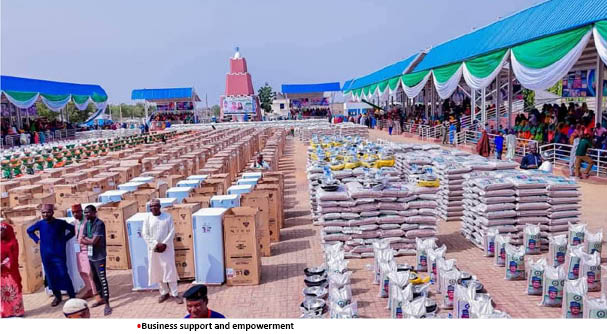
Radda came with a clear idea of how best to develop the msme's sector in Katsina State particularly with the understanding that government cannot employ everyone. His solution was to build an ecosystem where small businesses can thrive. The centerpiece is the Katsina State Enterprise Development Agency (KASEDA), the first dedicated MSME agency in the state’s history.
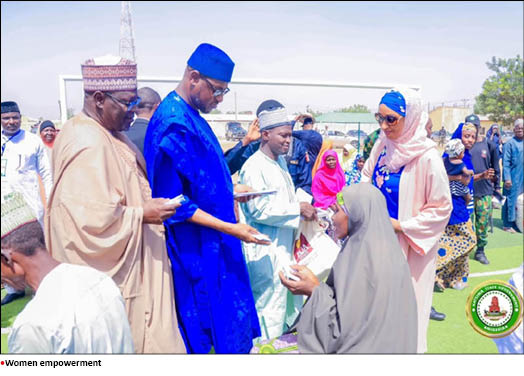
KASEDA manages a N5 billion revolving fund for entrepreneurship and skills training. Unlike one-off grants, the fund is designed to be repaid so it can support new entrepreneurs. Beneficiaries receive training in business management, record-keeping, and digital marketing before accessing capital. Priority is given to youth, women, and persons with disabilities.
Enterprise development is linked to other sectors. Farmers trained in agro-processing access KASEDA funds to buy equipment. Artisans and traders are taught to sell on WhatsApp and e-commerce platforms. ICT centres in LGAs provide digital literacy, while new masterplans for Katsina, Daura, and Funtua cities create organized commercial zones.
The administration also introduced merit-based appointments and digital governance to reduce bureaucracy and corruption, making it easier for businesses to get permits and licenses. The message is simple: if you train the youth, fund them, and protect the market, jobs will be created outside government.
Generally, what stands out in Governor Radda’s three years in office is not just the projects, but the interconnection. Smart Schools produce students who can use telemedicine in upgraded PHCs. Agro-processing centres depend on rural roads and KASEDA funding. Security from the Community Watch Corps makes it possible for farmers to access their fields and traders to move goods.
The administration reports that over 90% of policies in the 'Building Your Future' blueprint have commenced implementation, and independent bodies have recognized the effort through awards like Governor of the Year, 2023 and Best Performing Governor, 2025.

.jpg)
Comments (0)
No comments yet. Be the first to share your thoughts!