


The European Union (EU) has cautioned the Nigerian government against using the growing threat of artificial intelligence-generated misinformation as an excuse to restrict freedom of expression, censor digital platforms or intimidate journalists and political opponents ahead of the 2027 general elections.
The warning comes amid rising concerns over the potential misuse of AI technology to manipulate public opinion, circulate fabricated election results, spread misleading political content and provoke violence during the forthcoming polls.
The EU Ambassador to Nigeria and the Economic Community of West African States (ECOWAS), Gautier Mignot, issued the warning on Monday at a National Summit on Electoral Information Integrity held in Abuja.
The two-day event, organised by the International Press Centre (IPC), the Centre for Media and Society (CEMESO) and DAI under the European Union Support to Democratic Governance in Nigeria Programme, was themed Beyond the Ballot: AI, FIMI and the Integrity of Nigeria’s 2027 Elections.
Mignot acknowledged that artificial intelligence could significantly improve communication, translation and access to information but warned that the technology was also making it easier to manufacture convincing false information and manipulate public conversations.
He, however, stressed that efforts to tackle AI-generated misinformation must not undermine democratic freedoms or provide authorities with justification to silence legitimate criticism.
"The legitimate threat of AI manipulation must never become a pretext for state overreach, digital censorship or suppression of political dissent.
"A citizen questioning an institution is not necessarily spreading misinformation. A journalist reporting a failure is performing a democratic function," he said.
The EU envoy argued that Nigeria's biggest challenge was not simply identifying deepfakes and other manipulated content but creating an electoral environment where citizens could access credible information, public institutions communicated transparently and independent journalism operated without intimidation.
He urged electoral stakeholders to establish effective communication and verification mechanisms well before the elections, warning that waiting until election day to determine responsibilities and procedures could leave the country vulnerable to coordinated disinformation campaigns.
Mignot identified early preparation, stronger collaboration among relevant institutions and the protection of democratic rights as critical priorities for Nigeria ahead of the 2027 elections.
Jega proposes AI-powered chatbots for voters
Former Independent National Electoral Commission (INEC) Chairman, Prof. Attahiru Jega, also called on the electoral body to consider introducing artificial intelligence-powered chatbots to provide voters with reliable electoral information and counter the spread of misinformation.
Jega, who chaired the summit, said the technology could offer citizens quick access to official information and help them distinguish authentic electoral announcements from fabricated claims circulating on social media.
He disclosed that the proposal followed discussions at the 2024 Cambridge Conference on Electoral Democracy, where participants examined how election management bodies, particularly in Africa, could deploy chatbots to address misinformation and disinformation.
He urged INEC to explore the initiative if it had not already adopted a similar system, noting that AI could serve as a useful tool for strengthening electoral transparency when properly deployed.
INEC raises alarm over fake results, deepfakes
Meanwhile, INEC Chairman, Prof. Joash Amupitan, has warned that the growing accessibility of artificial intelligence could expose the 2027 elections to sophisticated forms of digital manipulation capable of triggering confusion, undermining public confidence and causing violence.
Amupitan identified AI-generated audio, manipulated videos, fabricated electoral documents and false announcements as major threats that could disrupt the electoral process.
He warned that individuals or organised groups could use the technology to produce fake election results, forge operational directives or circulate false claims that elections had been cancelled in particular constituencies.
According to him, such materials could spread rapidly across social media before the commission issues an official response, potentially creating tension among voters and political supporters.
"Today, elections can be undermined long before the first ballot is cast," the INEC chairman said.
He also identified synthetic media, automated misinformation campaigns, deepfakes, digital micro-targeting and Foreign Information Manipulation and Interference (FIMI) as emerging threats requiring urgent attention.
Amupitan illustrated the danger with the possibility of criminals using AI-generated voices to impersonate prominent political figures and make false allegations of vote-buying or electoral manipulation.
He also warned that fabricated videos could falsely portray electoral officials announcing decisions they never made, particularly during result collation and announcement, when misinformation could easily provoke public reactions.
The INEC chairman said the increasing sophistication and affordability of AI tools had lowered the barriers to producing deceptive content, making it more difficult for citizens to distinguish genuine information from digitally manipulated materials.
However, he disclosed that the commission had established an artificial intelligence unit to monitor emerging technological threats and develop safeguards for the electoral process.
He noted that AI also offered opportunities for improving election administration, including voter register analysis, logistics planning, data processing and other administrative operations.
As part of its efforts to address digital manipulation, Amupitan said INEC had signed a memorandum of understanding with TikTok and was seeking stronger cooperation with other social media platforms, including Facebook, Instagram, WhatsApp, YouTube, Telegram and X.
He added that the commission had introduced ChatGPT to support its activities and was working with development partners, including the European Union, to establish a strategic communication crisis network.
He further warned that relying exclusively on fact-checking after false information had circulated would be inadequate, noting that manipulated content could reach a large audience within 30 minutes.
He therefore called for coordinated action involving INEC, security agencies, media organisations, technology companies and fact-checking organisations to identify and respond quickly to emerging threats.
HURIWA demands security task force over attacks on political supporters

Beyond the dangers of digital manipulation, the Human Rights Writers Association of Nigeria (HURIWA) has raised concerns over reported attacks on political supporters, campaign teams and activists in different parts of the country.
The organisation condemned the reported attack on members of the Nigeria Democratic Congress (NDC) during a ward meeting in Obuofia, Nkanu West Local Government Area of Enugu State, where several members were reportedly injured.
It also criticised an attack on APC supporters travelling to Funtua for the flag-off of Governor Dikko Radda's re-election campaign in Katsina State.
The supporters were reportedly attacked by suspected hoodlums along the Malumfashi axis, where stones and other objects were allegedly thrown at vehicles conveying them, damaging windscreens and windows and leaving some passengers with minor injuries.
HURIWA further condemned the disruption of the inauguration of Abia State Governor Alex Otti's re-election campaign at Umuahia Township Stadium, where rival political groups reportedly caused disorder during the proceedings.
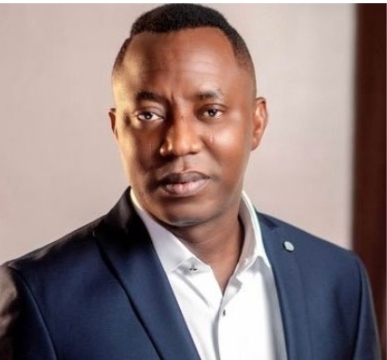
The association also expressed concern over the reported assault on human rights activist and African Action Congress presidential aspirant, Omoyele Sowore, and members of his team in Ado-Ekiti, Ekiti State.
Sowore had alleged that a mobile phone stolen during the attack was traced to the Ekiti State Governor's Lodge.
Describing political participation and peaceful association as fundamental democratic rights, HURIWA called on the National Security Adviser to establish a joint security task force made up of professional and non-partisan personnel to protect political parties, candidates, campaign officials and supporters.
It also urged the police, Department of State Services and other security agencies to develop a coordinated security arrangement for campaign rallies, ward meetings, political tours and other electoral activities.
The organisation warned political parties and their supporters against using violence and intimidation to suppress opposing political groups, insisting that Nigerians must be free to participate in the electoral process without fear of attacks.
IPAC raises concerns over INEC's voting equipment
In another development, the Inter-Party Advisory Council (IPAC), Lagos State chapter, has urged INEC to ensure that all voting equipment and technological facilities are properly upgraded, tested and maintained before the 2027 elections.
The council's state chairman, Temilola Akinade, expressed concern that technical failures during the polls could undermine public confidence and create unnecessary disputes over election results.
"We do not want any disappointment from INEC, particularly in the area of the voting system, during the 2027 general elections.
"All electoral equipment must be properly tested, upgraded where necessary and maintained to guarantee a smooth and seamless voting process," she said.
Although she acknowledged the commission's preparations, Akinade urged it to intensify efforts to ensure that electoral technology functions effectively across polling units.
She also called on federal and state governments to provide equal opportunities for political parties to campaign and present their candidates without intimidation or unnecessary restrictions.
The IPAC chairman equally urged political parties to educate their supporters on peaceful political participation, tolerance and respect for opposing views, stressing that campaigns should focus on policies and issues rather than violence and personal attacks.
Journalists seek stronger protection ahead of 2027 polls
Meanwhile, media professionals and security representatives have called for improved protection of journalists covering the 2027 elections, warning that attacks, harassment and the failure to prosecute perpetrators could discourage independent reporting.
The call was made at a symposium organised by the Media Centre for Promotion of Safety Awareness in Lagos to commemorate the International Day to End Impunity for Crimes Against Journalists.
The event, themed Election Safety: Reporting Without Being a Casualty, examined the security challenges confronting journalists during election coverage and the need for stronger protection measures.
Guest speaker, Ugo Onuoha, attributed the persistence of attacks on journalists partly to the benefits some individuals derive from intimidating reporters who expose wrongdoing in government and the private sector.
He urged media organisations to strengthen safety training, provide protective equipment and ensure that reporters understand the security risks associated with their assignments before deployment.
Onuoha also advised journalists to avoid travelling alone to volatile locations, maintain communication with security agencies, back up important files and adopt digital protection measures such as encrypted communication channels, PIN locks and the removal of sensitive information from their devices.
He emphasised that journalists must pay attention to both their physical and psychological well-being when covering dangerous assignments.
During a panel discussion, a police representative, ASP Muhammed, described journalists and security agencies as partners in maintaining public order, urging reporters to understand their operating environments, remain neutral and stay close to security personnel whenever tensions escalate.
The Deputy Police Public Relations Officer of the Lagos State Command, Adeola Olufemi, also encouraged journalists to remain observant, maintain communication with the police and follow relevant safety advice during high-risk assignments.
A former chairperson of the Nigeria Association of Women Journalists, Adeola Ekhine, advised media practitioners to remain alert to their surroundings, stressing the importance of personal safety while carrying out their professional responsibilities.
Other participants recommended that journalists covering elections should have appropriate safety kits, first-aid materials and comfortable clothing to reduce their exposure to risks.
The symposium convener, Chinyere Amaechi, recalled incidents of harassment involving journalists during the 2023 general elections and alleged that the failure to make arrests in some cases had encouraged a culture of impunity.
With concerns ranging from AI-generated election propaganda and fabricated results to political violence, electoral technology failures and attacks on journalists, the discussions at the various events underscored the growing pressure on Nigeria's electoral institutions and stakeholders to address security and information integrity before the 2027 general elections.

Comments (0)
No comments yet. Be the first to share your thoughts!