


By Solomon Dalung, LLB, LLM, BL
Igbarman Otarok & Garkuwan Arewa
Igbarman@gmail.com
Nigeria’s political system has, for decades, been characterised by dominance, favouritism and exclusion. The major ethnic groups — Hausa, Fulani, Yoruba and Igbo — have long maintained a grip on the nation’s political power, while the Middle Belt and South-South remain politically convenient but expendable.
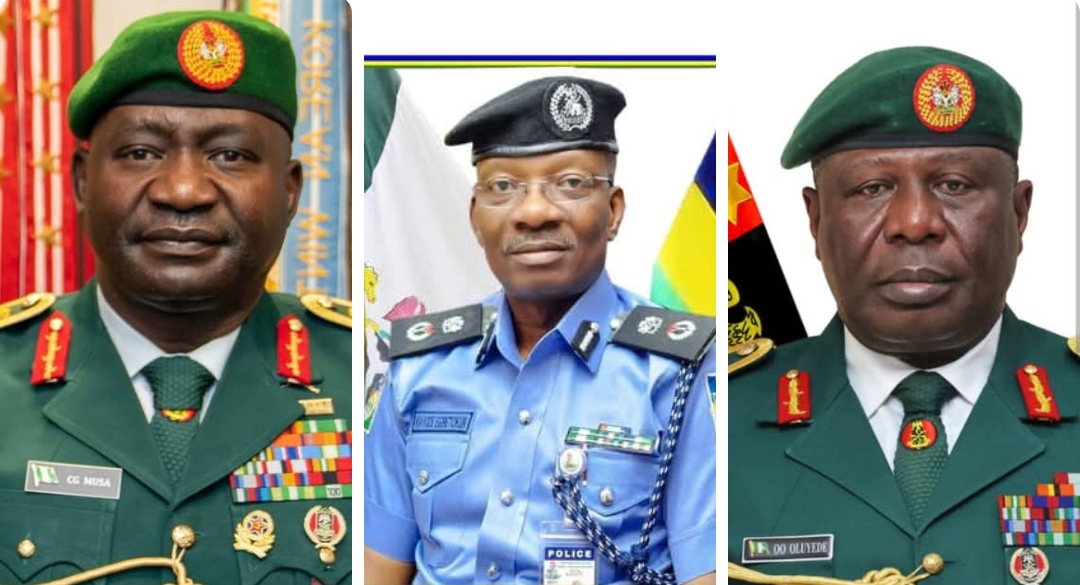
These minority regions, despite their vital contributions to national unity and economic survival, continue to serve as tools of political manipulation — embraced during elections and abandoned once power is shared. The recent removal of the Chief of Defence Staff, General Christopher Gwabin Musa, and the extension of Inspector General of Police (IGP) Kayode Egbetokun’s tenure, perfectly illustrate this enduring imbalance.
General Musa, appointed in 2023 as a symbol of inclusivity and professionalism, earned wide respect for improving coordination and synergy within the Armed Forces. Yet, less than two years later, he was abruptly removed and replaced by a Yoruba general who had previously served under him.
The official explanation — “strengthening the national security architecture” — rings hollow in a country where political calculations often outweigh competence. For many in the Middle Belt, the message is unmistakable: representation is temporary, and loyalty is no guarantee of continuity.
At the same time, IGP Kayode Egbetokun, who had already reached retirement age, was granted an extension of service. The contrast between Musa’s removal and Egbetokun’s retention exposes the double standards that define Nigeria’s governance — flexible for some, rigid for others. It reinforces the growing belief that appointments in Nigeria are rarely guided by merit, but by sectional and political interests.
The plight of Nigeria’s minority regions is not new. The Middle Belt, often described as the “bridge of national unity,” has for years suffered from political fragmentation driven by ethnic and religious manipulation. Similarly, the South-South, the heart of Nigeria’s oil wealth, continues to endure environmental degradation and economic neglect despite sustaining the country’s economy.
Both regions have produced patriotic leaders, soldiers and reformers who have served Nigeria with loyalty and excellence, yet they remain marginalised in the nation’s power structure. Each phase of supposed inclusion ends in disappointment, further eroding trust and national cohesion.
As the 2027 elections draw nearer, political realignments are already underway among the dominant blocs, who seek to retain power at all costs. Once again, minority regions are being courted as electoral ornaments — useful for legitimacy but disposable after victory. Unless the Middle Belt and South-South act decisively and strategically, they risk being used yet again in another cycle of exclusion.
The removal of General Musa is, therefore, not merely a personnel decision, but a warning sign of the fragility of minority representation in Nigeria’s power hierarchy.
To escape this pattern, minority regions must embrace a new political strategy anchored on unity, negotiation and structural reform.
First, the Middle Belt and South-South must forge a broad alliance that transcends ethnic and party boundaries. Together, they hold decisive voting strength, natural resources and human capital capable of reshaping the country’s power equation.
Second, their politics must move away from personality-based loyalty to issue-based engagement, pressing for constitutional guarantees of inclusion, tenure protection for key offices, and genuine fiscal federalism that empowers sub-national development.
Third, they must mobilise civil society, youth and religious groups to champion a common agenda of justice and equity.
The removal of General Musa and the extension of Egbetokun’s tenure vividly capture Nigeria’s recurring pattern of selective justice. As the country approaches 2027, this moment offers both a warning and an opportunity.
If the Middle Belt and South-South remain divided and reactive, they will once again be political pawns. But if they unite around a shared vision of fairness, merit and justice, they can transform Nigeria’s politics from a game of exclusion into a partnership for progress.
The time has come for Nigeria’s minorities to stop being used — and to start negotiating power on their own terms.