


Katsinatimes
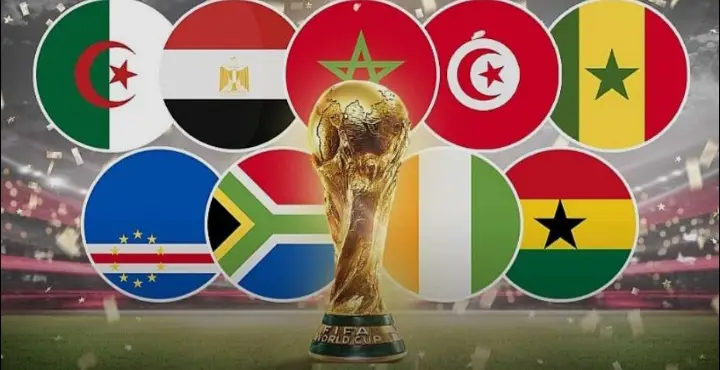
African football has reached a historic milestone at the 2026 FIFA World Cup, with an unprecedented collective performance that signals a new era of global competitiveness for the continent.
For decades, Africa's presence at the FIFA World Cup was defined by isolated moments of brilliance rather than sustained success. From Egypt’s historic debut in 1934 to Morocco’s groundbreaking run to the semi-finals in 2022, the continent has steadily strengthened its position on the world stage through improved coaching, better football development programmes, stronger domestic leagues and increased international exposure.
Before the 2026 tournament, African nations had made 49 appearances at the FIFA World Cup, with only 11 teams advancing beyond the group stage—a qualification rate of just 22.4 per cent.
However, the 2022 World Cup in Qatar marked a turning point. Morocco and Senegal progressed to the Round of 16, while Morocco became the first African nation to reach the semi-finals, finishing fourth overall.
The expansion of the FIFA World Cup to 48 teams in 2026 further boosted Africa's representation, with the Confederation of African Football (CAF) receiving 10 qualification slots—double the previous allocation.
The continent responded with its best-ever World Cup campaign.
Nine of Africa's 10 representatives advanced to the Round of 32, representing a remarkable 90 per cent qualification rate—more than four times the continent's historical average. Tunisia was the only African team eliminated in the group stage.
Even after South Africa's exit in the Round of 32, eight African nations remained in contention, underlining the continent's growing strength in world football.
Morocco once again led Africa's charge, finishing second in Group C with seven points behind Brazil to secure another place in the knockout rounds.
Côte d’Ivoire recorded their best-ever World Cup performance by reaching the knockout stage for the first time after collecting six points in Group E.
Egypt also impressed, finishing second in Group G with five points, while Cape Verde emerged as one of the tournament's surprise packages by qualifying for the knockout rounds on their World Cup debut.

Senegal, Ghana, DR Congo and Algeria also progressed as four of the tournament's best third-placed teams, while South Africa contributed to Africa's record-breaking qualification campaign before bowing out.
Africa's rise has been built on decades of landmark achievements.
Egypt became Africa's first World Cup participant in 1934, while DR Congo, then Zaire, became the first sub-Saharan African nation to qualify in 1974.
Tunisia secured Africa's first World Cup victory by defeating Mexico in 1978, before Morocco became the first African nation to progress beyond the group stage in 1986.
Cameroon reached the quarter-finals in 1990 after defeating defending champions Argentina, a feat later matched by Senegal in 2002 and Ghana in 2010.
Morocco eventually broke new ground in 2022 by becoming Africa's first World Cup semi-finalists.
Cameroon remain Africa's most frequent World Cup participants with eight appearances, followed by Morocco and Tunisia with seven each, while Nigeria has reached the Round of 16 on three occasions.
South Africa also remains the only African nation to have hosted the FIFA World Cup, staging the tournament in 2010.
According to CAF, Africa's outstanding performance at the 2026 FIFA World Cup marks the beginning of a new era for the continent in global football.
Statistics further highlight the scale of the achievement, with Africa's knockout-stage qualification rate rising from a historical average of 22.4 per cent to an unprecedented 90 per cent in 2026—an improvement of 67.6 percentage points and more than a 300 per cent increase over previous tournaments.
Regardless of the eventual outcome of the competition, Africa's performance at the 2026 FIFA World Cup has already secured its place as one of the defining chapters in the history of African football.
Comments (0)
No comments yet. Be the first to share your thoughts!