


.jpg)
President Bola Ahmed Tinubu has directed state governors to take immediate steps to reduce transportation costs across the country by taking advantage of the lower operating costs associated with Compressed Natural Gas (CNG) and electric vehicles, with the Federal Government targeting October 1 for the beginning of cheaper fares.
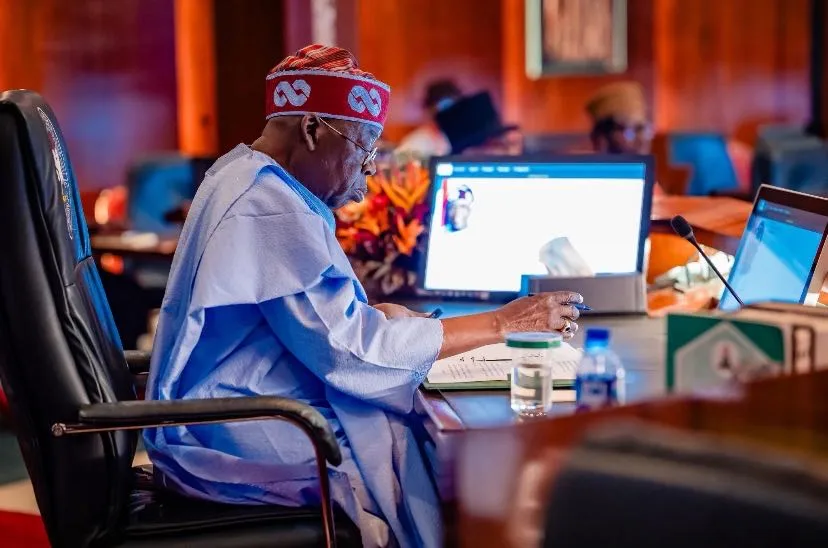
The President made this known on Thursday after meeting with some state governors at the Presidential Villa in Abuja, saying the Federal and state governments would work together through a joint committee to implement measures aimed at bringing down transportation costs.
The announcement comes amid an increasingly heated political debate over the removal of petrol subsidy and the rising cost of living, with former Vice President and African Democratic Congress (ADC) presidential candidate, Atiku Abubakar, recently proposing a redesigned subsidy regime that would support crude supplied to Nigerian refineries rather than subsidising imported fuel.
Tinubu said the decision by the governors was driven by the need to ensure that Nigerians begin to benefit directly from the lower cost of alternative fuels, particularly in intra-state transportation where state governments have significant influence.
“I am pleased with my discussion with the Governors’ Forum this afternoon. The governors have, on their own initiative, resolved to take immediate measures to bring down the cost of transportation in their states, with a strong focus on leveraging the cost benefits of CNG and electric vehicles,” he said.
The President disclosed that the Federal Government had already converted more than 120,000 vehicles to CNG, while more than 100,000 additional conversion kits were in production.
He said the government was simultaneously expanding conversion centres and refuelling infrastructure nationwide through the Presidential CNG Initiative and other interventions.
Tinubu added that the Midstream and Downstream Gas Infrastructure Fund was financing more than 100 gas projects across the country, comprising 15 CNG mother stations and 86 daughter stations.
He also disclosed that four projects had been commissioned in Lagos, Abuja and Owerri, including a 15-station refuelling network in Lagos and an Abuja facility capable of servicing about 1,000 cars and tricycles as well as 50 trucks and buses daily.
According to the President, an additional 500 CNG refuelling stations have now been ordered nationwide, on top of another 500 stations approved earlier in the year.
Tinubu said the government’s objective was straightforward: if motorists spend substantially less on fuel, commuters should also pay less for transportation.
“A vehicle running on CNG spends 60 to 80 per cent less on fuel than one running on petrol. From October 1, our goal is that Nigerians begin to partake in those savings through lower transport fares. We have agreed that cheaper fuel should result in cheaper fares,” he said.
However, the announcement immediately drew a sharp response from Atiku’s camp, which accused the President of reacting to the former Vice President’s campaign for a cheaper energy regime.
Atiku has argued that his proposed subsidy model would support crude supplied to Nigerian refineries rather than return to the old system of subsidising imported petroleum products. He said the objective would be to reduce fuel costs while ensuring that government intervention could be monitored and tied to verifiable domestic production.
Reacting to Tinubu’s transportation announcement, Atiku’s Senior Special Assistant on Public Communication, Phrank Shaibu, described it as “panic dressed in presidential grammar.”
Shaibu argued that Nigerians had been dealing with rising food and transport prices for years and that the government was only now acknowledging the direct relationship between fuel costs and the wider cost of living.
He maintained that Atiku’s position had always been that government should focus on reducing the cost of energy used by households, farmers, businesses and transport operators.
According to him, CNG could play an important role in reducing transportation costs, but the government should not rely on the alternative fuel as a substitute for broader measures to address the effects of petrol price increases.
The Nigeria Governors’ Forum (NGF), meanwhile, said it was prepared to support the proposed National Affordable CNG Transit Programme (NACTP), a state-led initiative aimed at translating the lower operating cost of CNG into reduced passenger fares.
The governors discussed the programme during a meeting at the NGF Secretariat in Abuja and considered proposals involving state support for vehicle conversions, CNG-powered fleets and enabling infrastructure.
Bayelsa State Governor Douye Diri, who read the forum’s communiqué on behalf of the NGF Chairman, Kwara State Governor AbdulRahman AbdulRazaq, said high transportation costs were contributing significantly to inflation and putting pressure on ordinary Nigerians.
He said state governments would work with private investors to increase the number of CNG vehicles in operation, noting that cheaper gas could have a wider impact on the economy.
“Gas is cheaper than petrol, which will actually reduce the costs of transportation,” Diri said.
The governors, however, said the financing structure and implementation details of the programme were still being developed.
While the government continues to promote CNG as a cheaper alternative, motorists already using the fuel say the reality on the ground remains far from seamless.
In Abuja and other parts of the country, CNG users have complained about inadequate refuelling stations, long queues and inconsistent availability of the product. Some motorists reportedly spend several hours waiting to refuel, while commercial drivers say the delays are affecting their earnings.
A member of the Amalgamated Union of App-Based Transporters of Nigeria, Comrade Chiwendo Ogbonna, said motorists sometimes spend an entire day waiting to obtain CNG.
“Cars queue from morning till night. Before you are able to get gas, you have to queue for the whole day,” he said.
Ogbonna argued that the rapid conversion of vehicles would not solve the problem unless the government and private investors also expanded the refuelling network.
“Every day, more than 100 vehicles are converting from fuel to CNG. But conversion is not where the matter ends. It is about getting the gas,” he added.
Another motorist, Chuka Ajibo, called for greater private-sector participation, saying the growing demand for CNG presented an opportunity for more businesses to invest in refuelling infrastructure.
CNG user Chibuzor Evrunobi also identified inadequate stations and unreliable supply as major challenges.
“CNG is not always available. Even when it is available, the cars are more than the stations,” he said.
The infrastructure challenge has also raised questions about the government's ability to meet its ambitious CNG targets. Although the Federal Government says more than 90 CNG refuelling stations have been established across 23 states, motorists' experiences suggest that the available network remains insufficient for the rapidly growing number of converted vehicles.
Long-distance transport operators face an additional challenge because routes without reliable CNG stations can force them to plan journeys around available refuelling points, potentially increasing downtime and operating costs.
Economist Dr. Marcel Okeke also expressed doubts about whether state governments could independently finance the President’s directive, particularly given rising inflation and the erosion of the purchasing power of state revenues.
He argued that although states now receive higher nominal allocations from the Federation Account, the increased revenue has been significantly weakened by inflation and naira depreciation.
Okeke said many state governments would struggle to finance new transportation interventions that were not sufficiently provided for in their 2026 budgets.
According to him, if the Federal Government wants the October 1 deadline to become a reality, it may have to provide a clear financing framework that will enable states to implement the directive without compromising other essential government programmes.
He also raised concerns about public finance leakages and the possibility of political considerations influencing the implementation of the initiative as Nigeria moves closer to the 2027 elections.
The CNG initiative was introduced by the Tinubu administration in 2023 following the removal of petrol subsidy, with the Federal Government presenting natural gas as a cheaper and cleaner alternative to petrol.
The programme has since become a central component of the government's strategy for reducing transportation costs, lowering dependence on petrol and encouraging the use of Nigeria’s abundant natural gas resources.
The administration says more than 120,000 vehicles have already been converted to CNG and that over $2.5 billion has been invested in the clean transportation programme.
The latest presidential directive therefore represents another attempt to ensure that the savings associated with CNG reach ordinary Nigerians.
But the success of the October 1 promise will ultimately depend on more than presidential directives and the number of converted vehicles. Adequate gas supply, a wider network of refuelling stations, reliable infrastructure, financing for state governments, compliance by transport operators and effective monitoring will all determine whether commuters actually feel the promised relief.
For Nigerians already struggling with high food, fuel and transportation costs, the real measure of the policy will not be the number of CNG stations announced or vehicles converted. It will be whether the next bus fare they pay is genuinely cheaper.
Comments (0)
No comments yet. Be the first to share your thoughts!