


TAIBAT UMMI YAKUBU
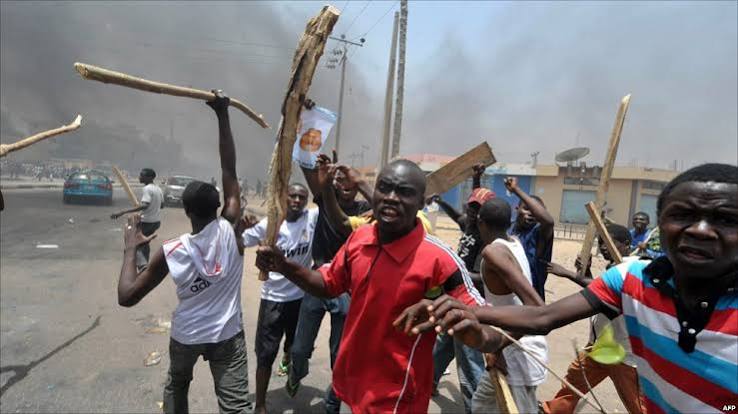
The Director-General of the Inter-Party Advisory Council (IPAC), Chinedu Obi, has disclosed that election-related violence has claimed about 140 lives across 26 states, raising concerns over the safety of the 2027 general elections.
Obi said the deaths occurred during the electoral process so far, warning that Nigeria could face more bloodshed if political actors and relevant institutions failed to address the factors fuelling violence.
He made the disclosure on Friday in Abuja during the launch of a nationwide campaign against electoral violence organised by the National Counter Terrorism Centre (NCTC), under the Office of the National Security Adviser, in partnership with the Civil-Military Cooperation Centre.
The campaign opened with a North-Central zonal town hall on November 27, 2026, as part of efforts to bring political parties, security agencies, community leaders and other stakeholders together to prevent violence before, during and after the 2027 elections.
According to Obi, preparations for the next general elections had already advanced considerably, with more than 55 per cent of the electoral process completed. He warned that unresolved weaknesses in the electoral system, coupled with provocative political statements, could create conditions for further violence.
He particularly questioned the arrangement under which political actors have a role in determining who heads the electoral umpire, describing it as a dangerous situation that could undermine confidence in the process.
Obi also blamed aspects of the Electoral Act for creating difficulties within political parties, especially in the management of internal disputes and the selection of candidates.
He said the country needed an electoral framework that guaranteed the independence of the institution responsible for conducting elections, rather than one that could leave it vulnerable to the influence of political contestants.
The IPAC chief further expressed alarm over political statements capable of encouraging attacks and killings, insisting that security agencies must respond to such threats instead of allowing inflammatory rhetoric to go unchecked.
He recalled the 2015 general elections, when former President Goodluck Jonathan helped ease fears of a possible post-election crisis by publicly declaring that his political ambition was not worth the blood of any Nigerian.
Obi urged political leaders and other stakeholders to draw lessons from that period and concentrate on ensuring that the remaining stages of the 2027 electoral process do not lead to violence.
He warned that a major crisis in Nigeria would have consequences beyond the country's borders, particularly because of the humanitarian burden such instability could create across the region.
“When Nigeria fails, everybody is dead. No nation can take the humanitarian consequences of any crisis in Nigeria,” he said.
Earlier, the National Coordinator of the NCTC, Major-General Adamu Laka, said the campaign was part of the Federal Government's efforts to protect democratic institutions and create a secure environment for credible and inclusive elections.
Laka argued that the success of an election should not be judged solely by the voting exercise or announcement of results, but also by whether citizens can participate freely and safely throughout the electoral process.

He identified misinformation, disinformation, hate speech, political intolerance, incitement, youth manipulation and the activities of political thugs as major factors that could provoke violence.
Other threats he highlighted included vote buying, voter intimidation, suppression of voters, attacks on election officials and the destruction of public infrastructure.
He said the campaign would focus on improving early-warning and response systems, strengthening public confidence and ensuring that vulnerable groups, including women, young people, persons with disabilities and internally displaced persons, were not excluded from the electoral process.
Laka stressed that election security could not be left to security agencies alone, calling for active participation from political parties, government institutions, traditional rulers, religious leaders, civil society organisations, the media and community groups.
He disclosed that the NCTC was working with the Independent National Electoral Commission, the Nigeria Police Force, the National Orientation Agency, other security agencies and development partners to extend the campaign to all 36 states and the Federal Capital Territory.
The initiative, he added, would also seek to prevent attacks on INEC offices and personnel, protect voters and electoral materials, counter fake news and strengthen community-level systems for identifying and reporting potential threats.
The NCTC coordinator appealed to young Nigerians not to allow politicians to use them to perpetrate violence, urging them instead to promote tolerance and participate responsibly in democratic activities.
He also called on political parties and their supporters to conduct issue-based campaigns, respect the law and avoid actions capable of endangering lives or threatening national unity.
In a goodwill message, the Minister of Defence, retired General Christopher Musa, said every Nigerian should be able to exercise the right to vote without intimidation or oppression.
Musa, who was represented by an Assistant Director, Oluwole Ashiru, advocated a collective approach to election security, urging traditional institutions, religious organisations, youth groups and community leaders to help promote peaceful conduct.
Similarly, the Norwegian Ambassador to Nigeria, Svein Baera, said the conduct of elections remained an important measure of the strength of a country's democratic institutions.
Baera noted that while credible elections attracted international recognition, electoral processes affected by violence and irregularities could weaken public confidence and damage a country's democratic standing.
He welcomed the campaign, stressing that election security efforts must begin well before election day because the process involves several stages that require sustained attention.


Comments (0)
No comments yet. Be the first to share your thoughts!