


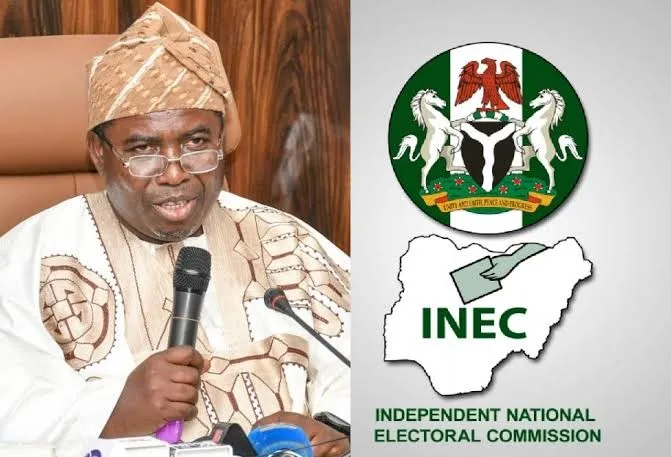
The African Democratic Congress (ADC) has called on the Independent National Electoral Commission (INEC) to review its practice of appointing university lecturers as Returning and Collation Officers, arguing that academics who openly identify with political candidates should not be allowed to supervise election outcomes.
The opposition party made the call following reports that more than 600 senior lecturers from public universities in Northern Nigeria had endorsed President Bola Ahmed Tinubu for the 2027 presidential election.
While acknowledging that academics, like all Nigerian citizens, have the constitutional right to support political candidates of their choice, the ADC warned that such public endorsements raise serious concerns about neutrality, particularly when the same category of individuals are often appointed by INEC to manage critical aspects of the electoral process.
In a statement issued by its National Publicity Secretary, Mallam Bolaji Abdullahi, the party said the development had sparked fresh questions about electoral credibility, transparency and potential conflicts of interest ahead of the next general elections.
According to the ADC, university lecturers and vice chancellors have traditionally played central roles in Nigeria’s elections, often serving as Returning Officers and Collation Officers responsible for compiling results and officially declaring winners.
The party argued that individuals who have publicly campaigned for or endorsed a candidate should not subsequently be placed in positions where they are expected to act as neutral officials in an election involving the same candidate.
“You cannot campaign for a candidate and then be entrusted with counting the votes and declaring winners in the same election that your candidate is contesting in,” the party stated.
ADC maintained that public confidence in elections depends not only on the voting process itself but also on the perceived impartiality of those charged with administering the exercise.
The party therefore urged INEC to introduce stricter guidelines governing the appointment of election officials and to ensure that individuals with clear political affiliations are excluded from sensitive electoral responsibilities.
Specifically, ADC called on the electoral commission to develop and publicly disclose criteria that would disqualify academics and other prospective election officials who have openly endorsed political candidates, participated in partisan activities or demonstrated political bias.

The party said such measures would help strengthen confidence in the electoral process and reduce concerns about undue influence or compromised neutrality.
It also asked INEC to publish the names of proposed Returning and Collation Officers well ahead of elections to allow political parties, civil society organisations and members of the public to identify and challenge potential conflicts of interest where necessary.
According to the ADC, transparency in the selection process would contribute significantly to building trust in the conduct of elections and help prevent controversies that could undermine the credibility of election results.
“The integrity of an election does not begin when the first ballot is cast. It begins with the neutrality of the people entrusted to administer, collate and declare its outcome,” the statement said.
The party added that Nigerians should never be placed in a situation where individuals who have openly taken sides in a political contest are later presented as impartial arbiters responsible for determining its outcome.
The call comes as political activities ahead of the 2027 general elections continue to gather momentum, with parties and stakeholders already focusing attention on issues that could shape public confidence in the electoral process.
Although INEC has yet to respond to the ADC’s proposal, the debate is expected to reignite discussions about the role of academics in election management and the safeguards needed to preserve the credibility of future elections.
As preparations for 2027 gradually intensify, questions surrounding neutrality, transparency and public trust are likely to remain central to conversations about Nigeria’s electoral system.


Comments (0)
No comments yet. Be the first to share your thoughts!