

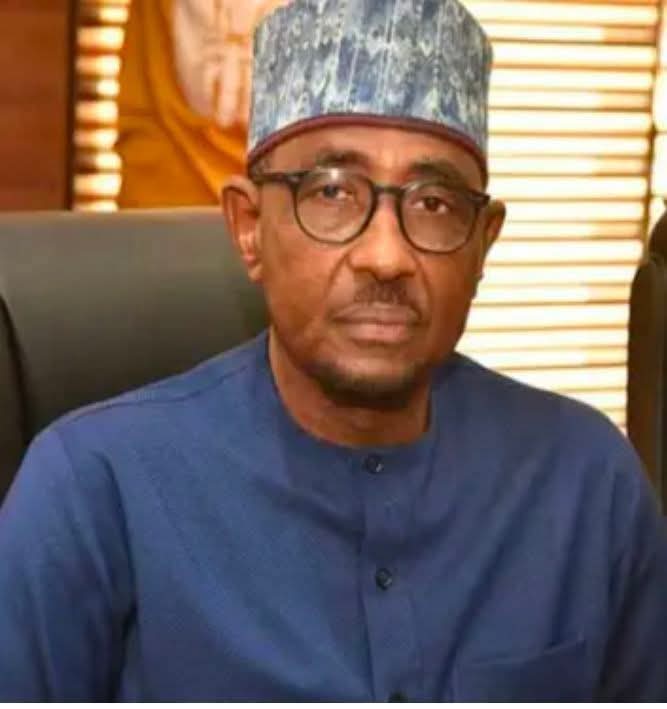
The Chief Executive Officer of the Nigerian Midstream and Downstream Petroleum Regulatory Authority (NMDPRA), Engr. Farouk Ahmed, has dismissed allegations that he illegally funded his children’s education abroad, describing the claims as misleading and driven by vested commercial interests threatened by recent regulatory reforms.
In a statement issued on Monday in Abuja, Ahmed said the allegations, which claim he spent about $5 million on his children’s education in Switzerland, were inconsistent with facts and his long record of public service in Nigeria’s petroleum sector.
Ahmed traced his career to 1991 when he joined the former Department of Petroleum Resources (DPR) as a junior engineer, stressing that his rise to the position of NMDPRA chief executive was based on merit and technical competence rather than political patronage.
He explained that he worked across key technical divisions, including crude oil marketing, gas supply monitoring and downstream operations, rising to General Manager of the Crude Oil Marketing Division by 2012 and later Deputy Director in 2015, before his appointment as NMDPRA CEO in 2021.
According to him, the allegation regarding his children’s education ignores scholarships and family support that reduced his personal financial obligations.
“Three of my four children received merit-based scholarships covering between 40 and 65 per cent of tuition costs,” he said, adding that his late father had also established education trust funds for his grandchildren before his death in 2018.
Ahmed noted that his annual remuneration as NMDPRA CEO, estimated at about ₦48 million including allowances, is publicly available in audited reports, and that his children’s education was funded through a combination of scholarships, family contributions and personal savings accumulated over three decades of public service.
He said he had consistently submitted asset declarations to the Code of Conduct Bureau and authorised educational institutions attended by his children to release relevant financial records to authorised investigators.
The NMDPRA boss linked the resurgence of the allegations to recent regulatory actions taken by the authority, including stricter quality control measures, tighter licensing requirements and enforcement of transparent pricing mechanisms in the petroleum downstream sector.
“These allegations are resurfacing at a time when NMDPRA has enforced standards that exposed substandard products and dismantled opaque practices that benefited certain market players,” he said.
Ahmed also defended the authority’s decision to issue import licences when domestic supply is inadequate, describing it as a statutory obligation under the Petroleum Industry Act (PIA) to ensure energy security and prevent scarcity.
He formally invited the Code of Conduct Bureau, the Economic and Financial Crimes Commission (EFCC) and the National Assembly to investigate his assets, income sources and regulatory decisions since 1991, pledging full cooperation with any genuine and professional inquiry.
“I did not seek this office for personal enrichment. If the price of regulatory independence is personal attacks, I accept that price,” he said.
Ahmed reaffirmed his commitment to implementing reforms under the PIA, insisting that transparency, supply security and regulatory independence remain central to NMDPRA’s mandate, regardless of pressure from powerful interests.