


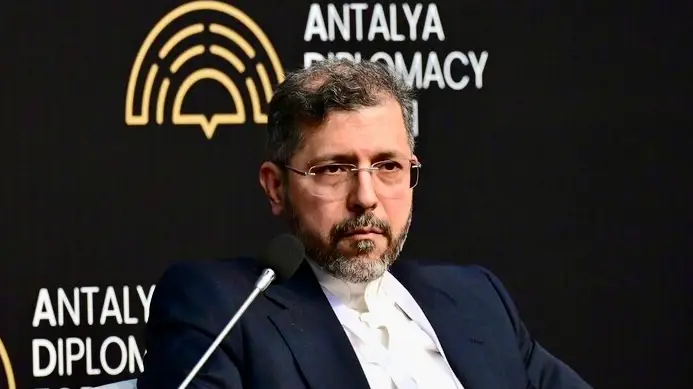
KatsinaTimes | Antalya (Türkiye), April 17, 2026
Iran’s Deputy Foreign Minister, Saeed Khatibzadeh, says the country is pushing for a comprehensive and permanent end to conflicts in the Middle East rather than a temporary ceasefire.
Khatibzadeh stated this on Friday in Antalya, Türkiye, while speaking to journalists on the sidelines of the Antalya Diplomacy Forum (ADF2026), held under the auspices of Turkish President Recep Tayyip Erdoğan.
He said any ceasefire arrangement must cover all active conflict zones across the region, from Lebanon to the Red Sea, describing this as a “red line” for Iran.
“We are not accepting any temporary ceasefire,” he said, stressing that the cycle of violence must come to a complete end.
According to him, recent mediation efforts by Pakistan were aimed at achieving a lasting resolution to the ongoing conflicts.
On the strategic Strait of Hormuz, Khatibzadeh said the waterway has historically remained open and that it lies within Iran’s territorial jurisdiction.
He accused the United States and Israel of contributing to regional instability, adding that their actions have had negative consequences for global trade and economic stability.
He maintained that Iran remains committed to ensuring the continued openness of the Strait, though he indicated that new arrangements could be considered in response to evolving security and environmental concerns.
Khatibzadeh added that a durable peace, alongside what he described as a shift away from “maximalist positions” by the United States, would help guarantee stability in the waterway and safeguard global commerce.
The News Agency of Nigeria (NAN) reports that the Antalya Diplomacy Forum, themed “Mapping Tomorrow, Managing Uncertainties,” focuses on navigating global uncertainty in a rapidly changing world.
The three-day forum opened on Friday amid ongoing global tensions, including the Russia-Ukraine war and the Israel-Iran-related security situation, as well as broader concerns over energy security and maritime trade routes.
The event has attracted world leaders, foreign ministers, diplomats, academics, and policy experts from about 150 countries.
NAN